Case study · made with Vanpelt Studio
I Filmed My Sapporo Vlog like An Horror Movie
The companion to the surf film, and the same move in the opposite direction. That one borrowed a genre to make a quarterly update watchable. This one borrowed a genre the location was already handing over for free: a flat roughly the size of the bed inside it, a week of unbroken grey, a floor that announced every step and a door that moved on its own. Every one of those would have quietly ruined an ordinary vlog. Together they are the vocabulary of a horror film.
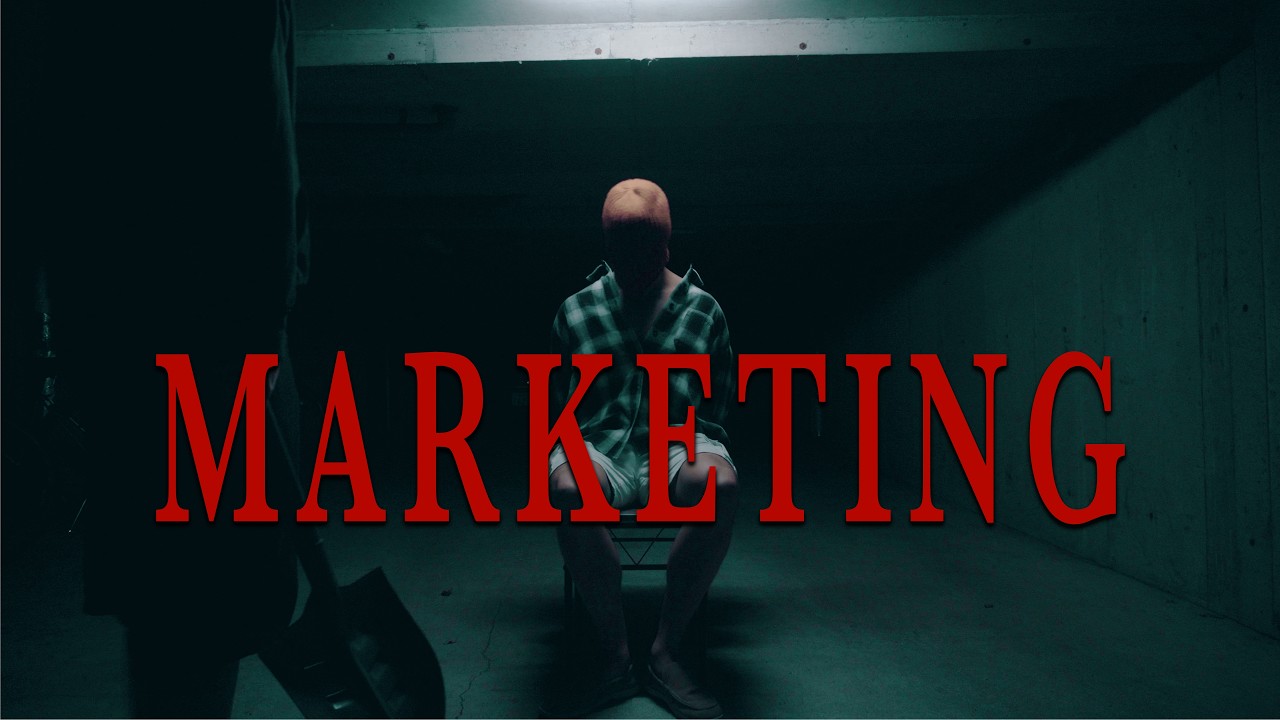
Why it looks like a horror film
What the shoot actually handed me
- An apartment roughly the size of the bed inside it. Sapporo, built for snow country, where small is how you keep the heating bill survivable.
- A week of unbroken grey. Overcast every single day of the shoot. No sun, no golden hour, nothing to wait for.
- A floor that announced every step, and a door that moved on its own. The building was noisy and slightly wrong in a way you cannot fix and cannot film around.
Every one of those is a problem for a normal vlog and an asset for exactly one genre. Low ceilings force a wide lens close to the face, which is the distortion horror reaches for deliberately. A single window on an overcast week gives soft directional light with deep falloff, for free, which is a lighting setup you would otherwise have to build. And a floor that creaks on cue is foley you do not have to record. The constraints were not obstacles to work around; they were a brief.
The location wrote the genre.
How the genre was actually built
- Cut the picture to the music, not the music to the picture.This is the one that matters. If you remove the score the video stops working, which is the test for whether the edit is actually serving the sound. The score was the spine and the cuts were arranged to land on it.
- A low drone under ordinary dialogue.Nothing on screen is wrong yet. The sound says otherwise, so the viewer is uneasy before anything has happened, which is cheaper and far more effective than a jump scare.
- Silence immediately before a beat.Do it twice and you have trained the audience to read quiet as a threat. From then on the absence of sound does the work that sound would have had to do.
- Sound arriving before the picture.Let the ear ask the question a beat early, then let the cut answer it. The viewer leans in to find out what they just heard.
- The wide lens close, and the one window doing all the lighting.Low ceilings and a wide lens produce the face distortion the genre is built on, and the single overcast window gives soft key with a fast falloff into darkness. No lights were fought with. The room was already lit the way the genre wants.
- The genre carries a real confession, not a ghost joke.The horror frame is pointed at something genuinely frightening: the founder anxiety about marketing a thing you have built. That is why it is not a bit. A borrowed genre only holds if there is something true underneath it.
The longer write-up: filming a horror movie in a Hokkaido apartment ↗
1 · The spine: a haunting with a punchline
Seven beats, planned before the shoot. The structure is a straight horror build (something is here, it escalates, he investigates, it is named) with one genre snap at beat 5, where the thing haunting him turns out to be Marketing, played by his girlfriend in head-to-toe black.
- hook Cold open: the haunting Something wakes him in the dark, small apartment. A presence is here and we do not know what it is: pose the question the whole video answers, which is what is in this apartment with me.
- setup Alone in the box Establish the character living alone in the cramped Sapporo flat. The depressive daily grind, the quirks of the space, the apartment itself subtly wrong. Plant the notification pings as innocuous background texture, because they come back.
- setup Something's off The small strange occurrences escalate rather than reset: flickering lights, sounds with no source, restless sleep. The paranoia and the isolation deepen together.
- setup Ghost hunting the beast Scared is not enough any more, so he investigates: a mock ghost-hunting rig, a wall of theories, trying to name what is haunting him. Each clue raises a bigger question instead of closing the small one.
- payoff The reveal: it is Marketing The entity is named AND seen: Marketing, played by his girlfriend head to toe in black, stepping into full light in the room he thought was empty. A hard genre snap from dread to absurdity in one cut, paying off the human-shaped shadow planted in beats 1 and 3 and recontextualising the notification sounds as her voice all along. never aired
- other Attacking the beast Naming it did not make it leave, so he stops trying to escape it and goes on the offensive: sits down and actually attacks Marketing head-on. Real work, aggressive follow-through, the beast treated as a fight to win rather than a roommate to accept.
- cta Sign off Direct, understated sign-off and subscribe prompt, tied back to the hook's question.
2 · The assessment, run after it shipped
Worth being precise about what this is. No pre-publish verdict was run on this project, so this is the video assessment taken after publishing, printed as it came back: five passes and one warning.
- ✓ Hook lands in the first ~15 secondsSilent, ominous apartment imagery creates an immediate unanswered threat without announcing the premise.
- ✓ Pacing and energy, minimal dead airThe cut moves from daily-life tension to investigation and a stark confrontation with sustained visual escalation.
- ✓ Audio is clear and well-levelledThe closing speech is intelligible over the music; the transcript shows no repeated clarity or level issue.
- ! Clear story arc / payoff, no sagThe planned girlfriend-as-Marketing reveal is not evident. If that was intentional, the spine should be updated to match the masked payoff that actually shipped.
- ✓ Delivers on the planned promiseThe ending explicitly names neglected marketing, resolving the horror metaphor the escalating apartment scenes set up.
- ✓ Clear call-to-action / deliberate endingEnds on a direct subscribe prompt: "if you enjoyed this video, make sure to subscribe."
3 · What actually aired
And here the audience disagreed with the assessment, which is the most useful thing on this page. The check passed the pacing. The retention curve did not: the first two minutes and fifty-nine seconds are a sound-and-music montage with no intelligible speech, and sixty-one per cent of the audience left during it. The one segment that holds flat, the only swell in the video, is the plainest moment in it: twenty-five seconds of admitting out loud that marketing has been neglected. The genre was the part that was fun to make. The confession is the part that worked.
- 0:00otherSound and music montage, no speech. 103% in, 43% out.
- 2:59payoffMarketing neglect admission. Holds flat at 43%: the only swell.
- 3:24ctaSubscribe prompt. 43% to 39%.
- 3:34transitionMusical outro and laugh. Dips to 25%.
Two honest gaps. No pre-publish verdict was ever run on this one, so the check above is a post-mortem rather than the thing that could have caught the three-minute silent opening before it shipped, which is exactly what that check exists for. And the planned reveal never made it to the cut: beat 5 is marked as not aired, and the assessment found the same thing independently from the finished video. The spine and the video diverged, nobody noticed until afterwards, and the retention curve had already paid for it.
Run the same check on your next video.