Aug 25, 2026 · by Baptiste, founder of Vanpelt Studio
How to write a video script: the full process, with a worked example
This is a start-to-finish process for scripting a talking video: a YouTube video, a tutorial, a documentary-style piece, anything where you speak and things appear on screen. It takes roughly 90 minutes for a ten-minute video once you’ve done it twice. You need an idea and a blank document; by the end you’ll have a script you can shoot from, which is a different and more useful thing than a script you can read.
To make it concrete, one example runs through every step: a maker video called “I insulated my van for $200.” Swap in your own topic; the moves are identical.
First, what a video script actually is
A video script is not an essay you’ll read aloud, and it’s not a screenplay. A screenplay formats scenes and dialogue for a crew shooting fiction. An essay organizes ideas for a reader. A video script plans two parallel tracks at once: what the viewer hears, and what the viewer sees, second by second.
That’s why the format that works isn’t pages of prose. It’s a two-column table, one row per section: what’s said on the left, what’s seen on the right. Film and broadcast schools teach this as the A/V script, and it’s what a production crew actually shoots from. For a solo creator it does the same job it does for a crew: it turns “I know roughly what I want to say” into “I know exactly what I need to point a camera at.”
When do you need one? Any video where you explain, argue, or tell a story: tutorials, essays, reviews, documentary vlogs. The more your video depends on ideas landing in order, the more the script pays. The main case where you don’t script much is pure moment-driven vlogging, and even then the first and last 30 seconds deserve the treatment below.
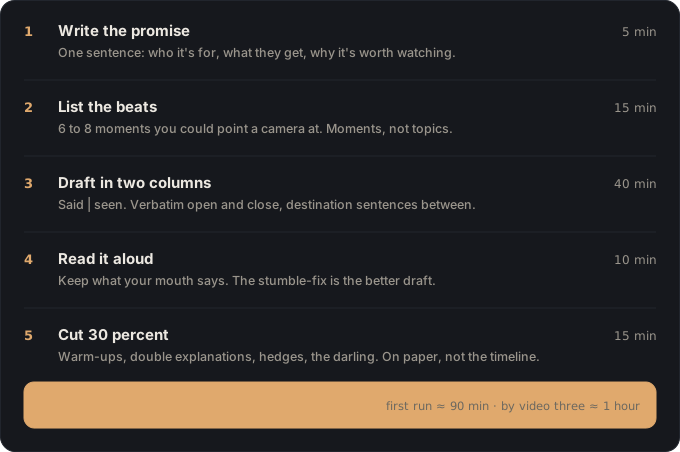
Step 1: write the promise (5 minutes)
Before any dialogue, open the document and write one sentence at the top:
This video shows [who] how to [get what], and the thing that makes it worth watching is [what].
For the van video: “This video shows broke van-dwellers how to insulate for $200 instead of $2,000, and the thing that makes it worth watching is that I test it in actual winter.”
Don’t skip this because it feels like homework. Every scripting problem you’ve ever had, the rambling, the video that “doesn’t flow,” the intro you rewrote five times, is usually this sentence missing. When nobody has decided what the video owes the viewer, every paragraph re-negotiates it. When the sentence exists, cutting becomes easy: anything that doesn’t serve it goes.
Why this works, if you want the theory: a title is a promise to a specific viewer, and the video is the payment. Deciding the promise first is what lets the title, the hook, and the script agree with each other instead of being written by three different moods on three different days. There’s a whole lesson on this if you want to go deeper.
Step 2: list the beats (15 minutes)
Under the promise, list the six to eight moments the video needs. Not topics. Moments you could point a camera at.
Here’s the difference, because it decides whether this step helps you or wastes your time. “Talk about insulation types” is a topic; you can’t shoot it, and on shoot day it will produce twenty minutes of rambling. “The moment I hold the $12 foil roll next to the $80 sheep wool and explain what the price difference actually buys” is a beat: you know exactly what to film and exactly what to say over it.
The van video’s beats might read:
- Cold open: thermometer reading 3°C inside the van
- The promise, said to camera: $200, real winter, honest verdict
- What $2,000 pros do, in 40 seconds, so the cheap version makes sense
- The $200 shopping run: what I bought and what I skipped
- Install day, including the part where the panels don’t fit
- The fix that saved it
- The test: one week of winter nights, logged
- Verdict + what I’d change
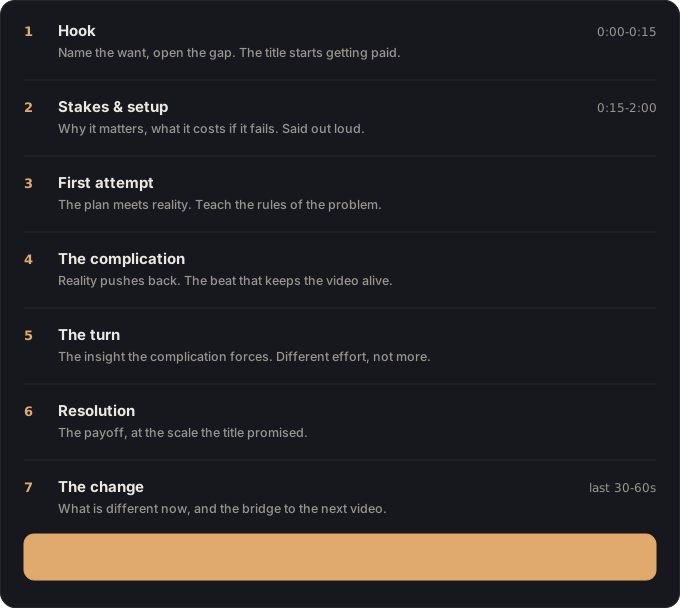
Long-form videos keep landing on roughly this shape (setup, attempt, complication, resolution) because that’s the shape attention follows. If you want the full skeleton with timings, it’s here; if you just want to write your list, notice one thing: beat 5 includes the problem. Plan for something to go wrong on camera. The beat where reality pushes back is reliably the one that keeps people watching.
Step 3: draft in two columns, at three levels of detail (40 minutes)
Now make the table: one row per beat, what’s said left, what’s seen right. And here’s the decision that saves you from both bad versions of scripting: not every row gets the same treatment.
- The first and last rows get written word for word. Your opening 15 seconds and your final 30 are the highest-stakes seconds in the video (YouTube literally grades intros by who’s still watching at 0:30). Write them out, then rehearse until they sound like talking. For the van video, the cold open line gets drafted exactly: “It’s three degrees inside my house. That’s the problem with living in a van in November, and I have $200 to fix it.”
- Every middle row gets one destination sentence. The point that beat must land, written down, plus the evidence next to it. Row 4’s left column might just say: “Land this: the $200 list covers 90% of the insulation value, and here’s the one thing worth paying up for.” On shoot day you say that sentence to yourself, roll, and talk. You’ll sound like a person, because you’re actually talking, but you can’t ramble far, because the destination is written.
- The right column gets filled for every row, no exceptions. This is the step most guides skip and it’s half the value of scripting. For every claim on the left, write what’s on screen: the receipt, the thermometer, the panel that doesn’t fit. If the best you can write is “me talking,” fine, some rows are that, but if every row is “me talking,” you’ve just learned your video has no evidence, and you’ve learned it before shoot day instead of in the edit.
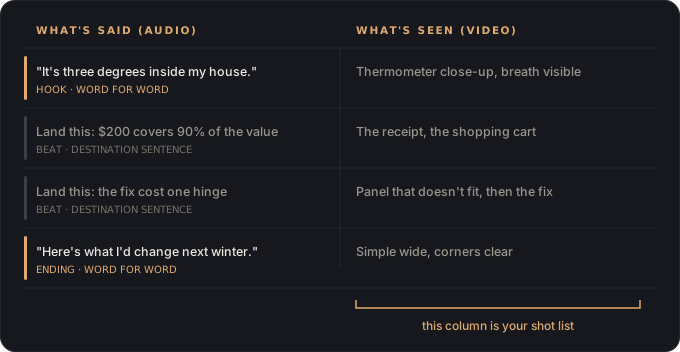
When you finish this step, look at what the right column became: it’s your shot list. You now know every single thing you need to film. That’s what “a script you can shoot from” means, and it’s why the two-column format beats prose even though it looks less like writing.
We keep a free copy-paste template of this exact table, pre-labeled with the beats, if you’d rather not build it from scratch.
Step 4: read it aloud and keep what your mouth says (10 minutes)
Stand up, read the whole script out loud at the energy you’d perform it, and watch what happens: on certain sentences you’ll stumble, or you’ll automatically say something simpler than what’s written. Those simpler versions are the correct draft. Type them in over the originals.
The reason this pass is non-negotiable: written English and spoken English are measurably different languages, and the difference has been measured.
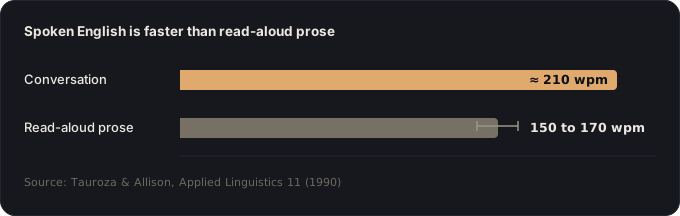
Listeners hear that gap as stiffness within seconds. You cannot fix a written-English script with delivery. You fix it by letting your mouth translate it once, before the camera is rolling.
Quick mechanical checks while you’re at it: if a sentence doesn’t fit in one breath, it’s two sentences. If you wrote “do not” or “it is,” contract them. If a key idea appears once, say it twice in different words somewhere, because a viewer can’t re-read.
Step 5: cut 30 percent (15 minutes)
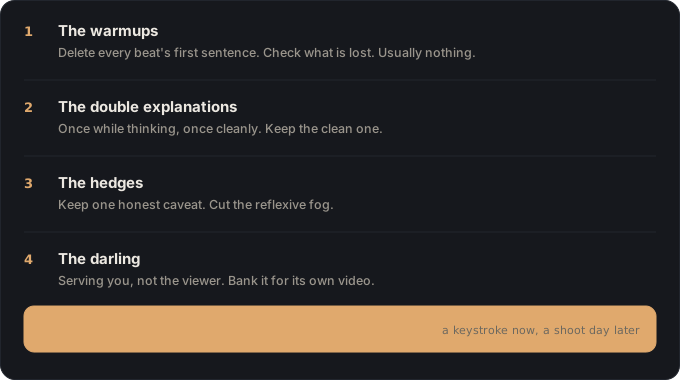
Your draft is too long. Every first draft is, and it’s long in the same four places, so hunt them specifically:
- Warm-ups. Delete the first sentence of every beat and re-read. Nine times out of ten, nothing is lost; the real opening was sentence two.
- Double explanations. You explained it messily while figuring it out, then cleanly after. Keep the clean one.
- Hedges. “Sort of,” “in my experience,” “obviously this depends.” One honest caveat on a genuinely uncertain claim is credibility; fog on every sentence is length.
- The darling. There’s one section you love that the promise doesn’t need. For the van video it was a five-minute history of foam chemistry. It hurt, and it went, and the video was better. Save it in an ideas file; darlings are usually their own video.
Why 30 percent and why now: a cut on paper costs a keystroke. The same cut discovered on the timeline costs the hours you spent shooting and editing the doomed section. And density is what keeps people watching; videos don’t feel long because of their runtime, they feel long where nothing is being promised or paid off.
If it went wrong, it’s one of these
- “It still sounds stiff on camera.” You’re reading the middle rows instead of talking them. Middle rows are destinations, not lines; say the sentence, look up, talk.
- “It’s way over length even after cutting.” The promise is too big. “Everything about van insulation” is a playlist, not a video. Shrink the promise, not the font.
- “I froze on the intro.” The intro wasn’t actually rehearsed. Verbatim rows need five out-loud runs, not two silent ones.
- “The footage didn’t match the script.” That’s normal, and it’s what the two-column sheet is for the second time: the evening after the shoot, go down the rows and mark what you actually got. Here’s that checklist; holes found that evening are 20-minute pickups instead of dead videos.
The whole recipe on one line
Promise (1 sentence) → beats (6 to 8 moments) → two columns, three levels of detail → read aloud, keep the stumble-fixes → cut 30% → shoot from the right column. First time through takes an evening. By the third video it’s an hour, and the edit on the other side is days shorter.
The free Scripting module goes one lesson deeper on each step if you want the full treatment; no signup, like everything on this site.
Sources
- Tauroza & Allison, Speech rates in British English, Applied Linguistics 11 (1990): the measured gap between conversational and read-aloud speech.
- The Evergreen State College, A/V Two Column Script and Shot List and Cornell University Library, Script Writing: Basic Video Production: the two-column format as taught in production programs.
- YouTube Help, Measure key moments for audience retention: the 30-second intro metric behind the verbatim-opening rule.