Titles & packaging · Lesson 1
The title is a promise
A title's job isn't to describe your video. It's to make one specific promise to one specific viewer, and mean it.
Most titles fail for the same boring reason: they describe the video instead of promising something. “My trip to Japan” is a description. “Japan broke every travel rule I had” is a promise: a specific expectation of what watching will deliver. The viewer scrolling past your video doesn’t owe you curiosity. The title has about a second to offer them a deal: give me your next ten minutes, and here is exactly what you’ll get.
That framing changes how you write. A description is finished when it’s accurate. A promise is finished when someone specific wants it kept.
The title is judged before the video exists to anyone
Here’s the uncomfortable math of it. Before a single frame plays, your video is competing as pure packaging: a thumbnail and a title in a feed of twenty others. YouTube’s own numbers put the stakes plainly:
Half of all channels and videos on YouTube see an impressions click-through rate between 2% and 10%.
YouTube Help, “Impressions & click-through-rate FAQs”
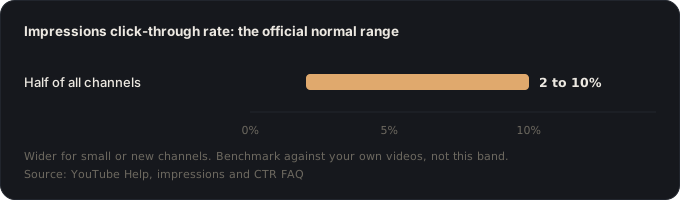
Sit with the low end of that. For a typical video, more than nine out of ten people who see your packaging decline the deal. The title isn’t a label on the product, for most of your potential audience, it is the product, the only part of twenty hours of work they will ever encounter. A weak promise doesn’t just cost you clicks; it makes the video invisible, because YouTube reads “shown, not clicked” as “don’t show it again.”
What a promise is made of
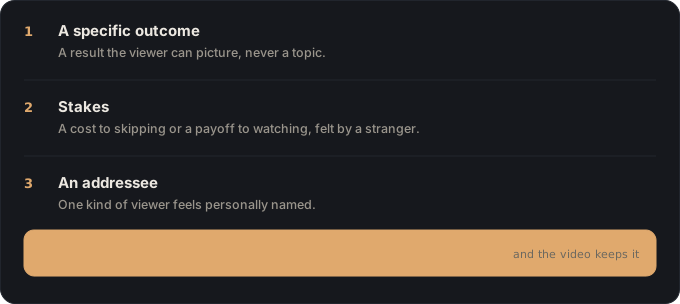
Strip any title that pulled you in recently and you’ll find the same three parts.
A specific outcome. Not a topic: a result, a revelation, an ending the viewer can picture wanting. “Woodworking mistakes” is a topic. “The mistake that ruins most first workbenches” is an outcome: watch this, avoid that.
Stakes. Why it matters that the outcome lands: money, time, embarrassment, a belief that might be wrong. Stakes are what separate “interesting, maybe later” from a click now. “I tested cheap microphones” has an outcome; “I tested cheap mics so you don’t waste $200” has stakes.
An addressee. Every real promise is made to someone. The strongest titles let one kind of viewer feel personally named: the beginner, the person about to buy, the creator stuck at 500 subscribers. If your title tries to address everyone who might conceivably enjoy the video, it names no one, and no one clicks on being no one.
Run your working title through those three. Most drafts have a topic where the outcome should be, no stakes at all, and an audience of “anyone.”
The promise disciplines the video, not just the click
Writing the title as a promise pays off twice. The obvious payoff is the click. The quieter one is that a real promise gives your video a spine: once the title says “the mistake that ruins most first workbenches,” the video has a contract to fulfill, a moment it must build to, a reason to cut everything that isn’t on the way there. Creators who package after editing get neither benefit: the title ends up describing whatever the edit happened to become, and the edit wandered because nothing was promised.
This is why the packaging-first workflow keeps winning: decide the promise before you shoot, and both the title and the video sharpen against each other. Your hook has to keep this same promise in the first thirty seconds: the title starts the contract, the opening delivers the first installment.
The promise check
- The title states an outcome the viewer can picture, not a topic.
- There are stakes: a cost to skipping or a payoff to watching that a stranger would feel.
- You can name the one viewer this promise is addressed to.
- The video actually keeps the promise, at the moment the viewer expects it.
- You wrote the promise before (or while) making the video, not after the edit.
🎬 Video script
- Cold open on two titles for the same footage: “My trip to Japan” vs “Japan broke every travel rule I had.” Ask which one you’d click, then admit they’re the same video.
- Put YouTube’s 2-10% CTR range on screen: for most videos, nine in ten people who see it say no. The title is the product.
- Break down promise anatomy (outcome, stakes, addressee) rewriting one weak title live through all three.
- Show the second payoff: how a promised title disciplines the edit, with a before/after beat list.
- Close: “Stop describing the video. Promise something to someone: then keep it.”
Sources
- YouTube Help, Impressions & click-through-rate FAQs: half of all channels and videos see an impressions CTR between 2% and 10%.
- YouTube Help, Thumbnail & title tips. YouTube’s own guidance to make titles concise, front-load the promise, and match content.
Key takeaways
- A title is a promise to a specific viewer, not a description of the footage.
- CTR measures the promise, not the video, a weak title buries a great video.
- If you can't say who the promise is for, it isn't a promise yet.