Hooks & intros · Lesson 5
Make the hook keep the title's promise
The click was a promise. If the first 30 seconds don't pay it off, the viewer swipes back, and YouTube notices.
A click is not a decision to watch your video. It’s a decision to sample it, based on a promise. Your title and your thumbnail made that promise (a specific expectation of what the next few minutes will deliver) and the viewer clicked to see it kept. The first thirty seconds are where you either keep it or break it.
This is the piece most hook advice misses. A hook isn’t judged in isolation. It’s judged against the promise that got the click, and a technically great opening that has nothing to do with the title is still a broken promise. The viewer doesn’t think “nice hook.” They think “this isn’t what I came for,” and they’re gone.
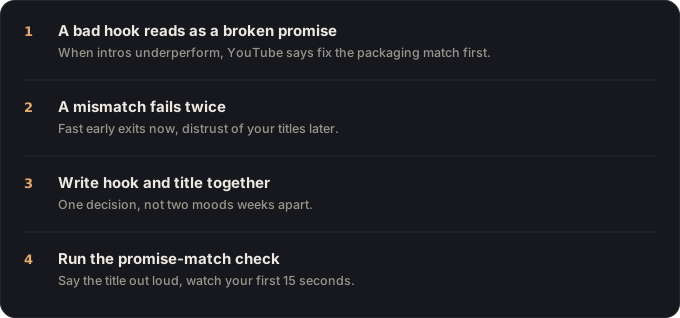
YouTube diagnoses a bad hook as a broken promise
Here’s the tell. When your intro underperforms, YouTube’s own guidance doesn’t start with “make a better video.” It starts with the packaging.
When your intro retention is weak, YouTube’s first suggestion is to change your title and thumbnail to better reflect your video’s content. A hook that isn’t landing is usually a promise that didn’t match.
YouTube Help, Audience retention
Sit with that. The platform treats a title/hook mismatch as the default explanation for early drop-off. Not production quality, not pacing: alignment. If people are leaving in the first thirty seconds, the most likely cause is that the video didn’t start being the thing they were promised.
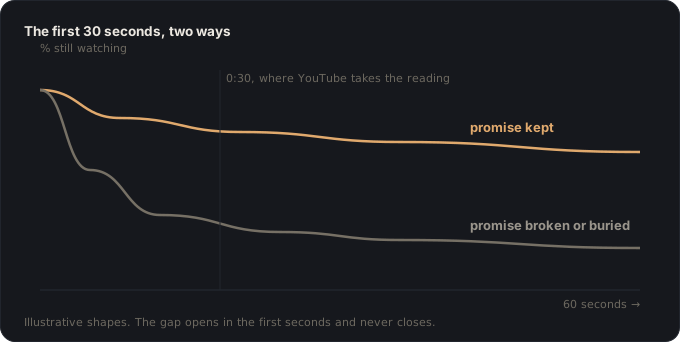
What a mismatch actually costs
A mismatch is worse than a weak hook, because it fails twice. First, the viewer leaves. That’s the obvious cost. But the second cost is quieter and more expensive: they leave fast and early, which is the exact signal YouTube reads as “this video didn’t deliver on its click.” A high click-through rate followed by a first-30-seconds collapse is the fingerprint of a broken promise, and it tells the algorithm to stop showing your video around. You can get punished harder for a great title with a mismatched hook than for a modest title that pays off.
And it compounds. Do it repeatedly and you train your own audience to distrust your titles: the returning viewers who should be your easiest 30-second hold start hovering over the close button because it’s you.
Write the hook and the title together
The root cause is almost always workflow. The title gets written at publish time, days or weeks after the intro was shot, by a version of you trying to maximize the click, while the hook was written by a different version of you trying to open the video. Two people, two goals, no conversation. Of course they don’t match.
The fix is to treat packaging and opening as one decision. Before you shoot the intro, know the promise: what does the title claim, and what would paying it off in the first fifteen seconds look like? Write the hook to that promise. Then, when you’re choosing the final title, sanity-check it against the hook you actually have, if the best title makes a promise your opening doesn’t keep, you change one of them. They ship together or they don’t ship.
One distinction worth keeping straight, because the words collide. The promise your title makes is a debt you have to pay, and this lesson is about paying it. Announcing your video (“in this video I’ll show you…”) is a different thing wearing the same word, and it is never a hook. The Hook Book separates the two, with rewrites for each pattern.
The promise-match check
- Say your title out loud, then watch your first 15 seconds. Does the opening start delivering that?
- The thumbnail’s implied payoff appears (or is clearly promised) in the opening.
- Nothing in the hook is a bigger promise than the video actually keeps.
- A stranger who read only your title would feel the first 30 seconds are “what I came for.”
- The title and the hook were decided together, not weeks apart.
🎬 Video script
- Open on a title card and a thumbnail, then cut to a hook that has nothing to do with them: “Great opening. Wrong video. Watch what the viewer does.” Show the swipe.
- Put YouTube’s own advice on screen: a weak intro, fix the title/thumbnail first.
- Show the retention fingerprint of a mismatch: high CTR, a first-30-seconds cliff.
- Demonstrate the fix live: read a title, then rewrite the first line of the hook to pay it off directly.
- Close: “The click was a promise. Your first thirty seconds are the receipt. Make them match, and package the whole thing before you publish.”
Sources
- YouTube Help, Measure key moments for audience retention. YouTube’s guidance to align title and thumbnail with the video when the intro underperforms.
- George Loewenstein, The Psychology of Curiosity, Psychological Bulletin 116 (1994): curiosity is the gap the promise opens; the hook has to be the promised gap, not a different one.
Key takeaways
- The hook must deliver the exact promise the packaging made.
- A title/hook mismatch is a top retention killer.
- Write the hook and the title together, not weeks apart.