Story & structure · Lesson 5
The pre-edit story check
The evening-after-the-shoot audit that finds structural holes while they're still a 20-minute pickup instead of a day-three edit-bay disaster.
Everything this module taught: the change, the seven beats, the stakes, the planted payoffs, was insurance for one specific evening: the one right after the shoot, when the footage is on the card and you’re deciding whether to relax or worry. Most creators skip the decision, drop the card in a drawer, and find out whether they have a video on day three of editing, staring at a timeline that sags in the middle for reasons they can’t name.
By then the answer is expensive. The same answer, found the evening after the shoot, is usually a 20-minute pickup: the location is fresh, the setup is muscle memory, the light still matches. That price gap (twenty minutes versus a dying video) is the entire argument for the pre-edit story check.
Why the platform makes this non-optional
A structural hole doesn’t stay a private craft problem. It surfaces in public metrics: the missing stakes flatten the intro, the absent complication produces the long mid-video bleed, the unearned ending kills the finish. And when the numbers come in weak, YouTube’s own diagnostic playbook starts at packaging and the opening,
When intro retention is weak, YouTube’s guidance is to check whether the content matches the expectation set by the title and thumbnail, and to experiment with the first 30 seconds.
YouTube Help, “Measure key moments for audience retention”
which is to say: the platform can only tell you about the hole after publish, when every fix is a compromise. The story check moves the same diagnosis to the one evening when fixes are still cheap and clean.
The check, in three passes
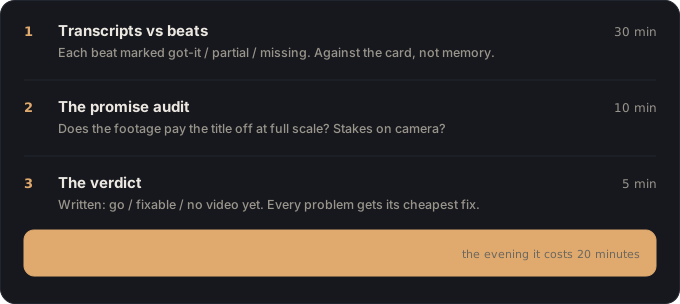
Pass 1: transcripts against beats (30 minutes). Get everything transcribed and read: reading is roughly ten times faster than scrubbing, and text exposes structure the way playback never does. Beat sheet beside transcripts, one question per beat: is this beat on the card, in a usable take? Not “did I shoot at that location”: is the moment, the sentence, the reaction actually captured? Mark each beat got-it / partial / missing.
Pass 2: the promise audit (10 minutes). Reread your working title and thumbnail note, then ask the transcripts: does the footage pay this off at the promised scale? Are the stakes stated out loud anywhere in the first act’s material? Does every planted setup have its payoff, and did the card catch any accidental setups worth promoting?
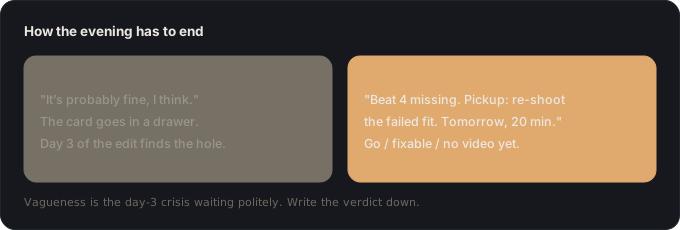
Pass 3: the verdict (5 minutes). Force a written answer: go / fixable / no video yet, with every problem paired to its cheapest exit. A missing beat: pickup shot, tomorrow, twenty minutes. A sagging middle: reorder, or drop the beat and tighten the promise. A broken premise: better to know tonight, before twenty hours of editing chases a video that was never on the card. Vague unease is not an output; “beat 4 missing, pickup = re-shoot the failed fit on the bench, 20 min” is.
The discipline that makes all three passes work: judge the card, not the memory. You remember the shoot as the day you experienced; the viewer only gets what was captured. The transcript is the honest referee between the two.
Both directions, same check
Plan-first creators run the check as written: beats in one hand, footage in the other. If you shot first and are hunting for the story afterward, the same audit runs in reverse: read the transcripts asking which change, stakes, and payoffs are already sitting on the card, pick the strongest candidate story, and then check it like it was the plan all along, gap beats and all. Either direction, you end the evening knowing whether you have a video: instead of finding out from the retention graph.
The story-check check
- Run the evening of the shoot, while pickups still cost 20 minutes.
- Every beat marked got-it / partial / missing against actual transcripts, not memory.
- The title’s promise was audited against the footage at full scale.
- Setups and payoffs balanced; accidental setups searched for and claimed.
- A written verdict exists: go / fixable / no video yet, each problem paired with its cheapest fix.
🎬 Video script
- Open on two timelines: the same structural hole found on day 3 of editing vs the evening of the shoot. Price tags on screen: a dying video vs 20 minutes.
- Show the platform’s after-publish version of this diagnosis (retention guidance) and the argument for running it before the edit instead.
- Run the three passes live on a real shoot: transcripts vs beats, the promise audit, then force the written verdict on camera.
- Show the reverse direction for footage-first creators: mining the transcripts for the story that’s already there.
- Close: “Twenty hours of editing should never be how you find out you don’t have a video. Check the card tonight.”
Sources
- YouTube Help, Measure key moments for audience retention: the platform’s post-publish diagnosis this check runs pre-edit.
- Paul J. Zak, Why Your Brain Loves Good Storytelling, Harvard Business Review (2014): the tension structure the audit verifies is actually on the card.
Key takeaways
- Structural holes are cheapest the evening after the shoot and most expensive on day three of editing.
- Audit transcripts against the beat sheet, reading is faster and more honest than scrubbing.
- The output is a verdict with fixes (pickup, reorder, or re-scope) not a vague feeling.