Aug 20, 2026 · by Baptiste, founder of Vanpelt Studio
The footage review checklist: what to do the evening after a shoot
The most expensive mistake in solo YouTube production happens on the easiest evening. The shoot went fine, the card is full, you’re tired, so the footage goes in a drawer and the questions go unanswered until editing day. And editing day is the most expensive possible place to learn that the ending never got shot, the stakes never got said out loud, or the best moment of the day has unusable audio.
Reviewed tonight, each of those is a footnote: a 20-minute pickup while the location is set up and the light still matches. Discovered on day three of the edit, each one is a crisis. This checklist is the 45 minutes that moves the discovery to the cheap side. Run it the evening of every shoot.
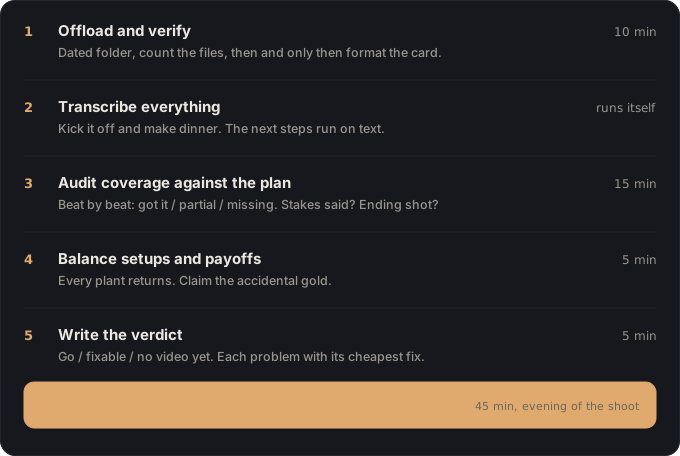
1. Offload and verify (10 min)
Copy the card into a dated, structured folder, and verify the copy before anything else: file count matches, a spot-checked clip plays. Only then does the card get formatted. Two rules that never bend: the copy happens tonight (cards in drawers are how footage dies), and originals are never modified afterward.
2. Transcribe everything (runs itself)
Kick off transcription on every talking clip while you make dinner: local tools do this free and unattended now. The transcripts are the whole engine of the next three steps, because reading is roughly ten times faster than scrubbing, and structural problems show up on a page of text in a way they never do at 1.5x playback.
3. Audit coverage against the plan (15 min)
Open your beat sheet next to the transcripts and ask, beat by beat: is this moment on the card, in a usable take? Not “did we shoot at that location”: is the sentence said, the reaction caught, the reveal actually on camera? Mark every beat got it / partial / missing.
Three checks that catch the classic day-three ambushes:
- The stakes got said. Somewhere in the first act’s material, the “if this fails, ___” sentence exists out loud. Viewers can’t infer stakes you only felt.
- The ending is footage, not intention. The payoff moment exists at the scale the title will promise. “I’ll cover it in voiceover” is the sound of a video sagging.
- Spot-check audio on the keepers. Thirty seconds per crucial clip. A dead mic discovered tonight is a pickup; discovered in the edit it’s a dead video.
4. Balance setups and payoffs (5 min)
Scan the transcripts for the ledger: does every planted setup have its payoff on the card, and (the fun one) did the day hand you accidental setups worth promoting? The offhand “this’ll definitely be fine” two hours before disaster is the best material you own, and it’s only findable by reading what you actually said.
5. Write the verdict (5 min)
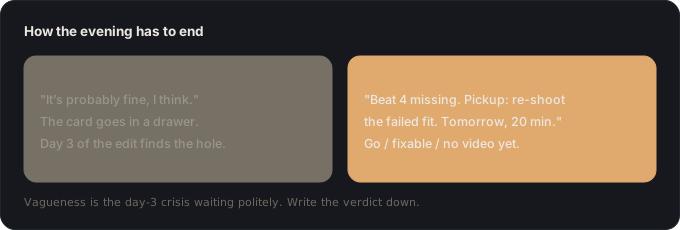
Force the evening to end in a written answer (go / fixable / no video yet) with every problem paired to its cheapest fix: which pickup, how long, when. “Beat 4 missing: re-shoot the failed fit, tomorrow, 20 min” is an output. A vague sense that it’s probably fine is not; vagueness is just the day-three crisis waiting politely. This verdict habit is the pre-edit story check in miniature, and it’s the difference between editing a video you know exists and excavating for one you hope does.
The checklist, on one screen
- Card offloaded to the dated folder, copy verified, then formatted
- Everything transcribed (kick off, walk away)
- Every beat marked got it / partial / missing: against transcripts, not memory
- Stakes said on camera; ending exists as footage; keeper audio spot-checked
- Setups ↔ payoffs balanced; accidental setups claimed
- Written verdict: go / fixable / no video yet, each problem with its cheapest fix
Tape it near the card reader. The evening you skip it is always the shoot that needed it.
The whole checklist: transcribe, index, check coverage against the plan, deliver the verdict with receipts, is what Vanpelt Studio runs automatically the evening after your shoot. Import the card; read the verdict over dinner.