Aug 24, 2026 · by Baptiste, founder of Vanpelt Studio
YouTube sponsorship rates in 2026: what the data actually supports
Sponsorship pricing is where creator folklore gets expensive. Charge from a guess and you either leave thousands on the table or price yourself out of deals; ask around and you’ll hear numbers spanning a 10× range, all delivered with total confidence. So let’s do this the honest way: what data exists, what it’s actually worth, and the math that turns your own analytics into a defensible rate, because unlike ad revenue, there is no published split here. This market is negotiated, and the informed side wins.
First, why sponsors pay more than AdSense
The structural fact under the whole market: a sponsor’s dollar reaches you whole, while an advertiser’s dollar reaches you through the platform’s 55% split, and the sponsor is buying something ads can’t deliver: your endorsement, in your voice, to an audience that trusts you (the parasocial relationship, monetized). That’s why integration CPMs run several times ad CPMs, and why brands keep paying them: creator marketing is now a standing line item in mainstream ad budgets, with YouTube consistently ranked among the top platforms for influencer spend.
What the reported numbers say, and how much to trust them
The largest observational dataset in this market is SponsorRadar, which tracks real brand-creator partnerships at scale: 1.3M+ sponsorships across 83K+ brands and 79K+ channels. Its published integration-CPM ranges by niche:
| Niche | Reported CPM |
|---|---|
| Finance & business | $40-$80 |
| Technology | $30-$60 |
| Health & wellness | $25-$45 |
| Education & productivity | $20-$40 |
| Lifestyle & vlogs | $15-$30 |
| Gaming | $10-$25 |
| Entertainment | $10-$20 |
Survey-based industry guides (Influencer Marketing Hub’s annual cost guide is the most established) land in the same territory (typical integrations $15-$30, with the same niche ordering) which is reassuring: two independent collection methods, one shape.
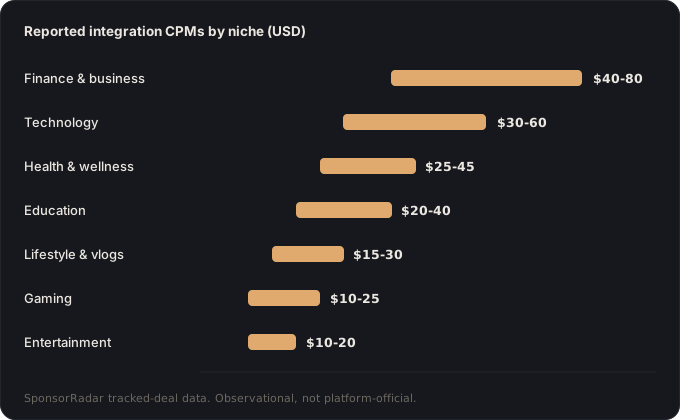
Now the trust audit, because this is exactly where misinformation creeps in: none of this is official data. There is no YouTube-published sponsorship market. Tracked-deal data is observational (it sees the deals it can detect, without every contract’s terms); survey data skews toward creators who talk about their rates; and both are blind to geography and deliverable differences inside each bucket. Read the ranges as market texture: proof that $5 CPM offers are lowball and $50 asks aren’t absurd in the right niche, never as a price list. Your price comes from the next section, not from a chart.
The math that sets your rate
Sponsors buy expected exposure, so price expected views:
Rate = expected views × CPM ÷ 1,000.
Two disciplines make it defensible. Expected views = the median of your last 10-15 comparable videos, not your best video, not your subscriber count (which sponsors rightly ignore), and median rather than mean so one outlier doesn’t wreck the estimate. Your CPM starts from your niche’s reported range and moves on evidence: up for high-intent audiences (the precisely-defined viewer is worth more per head than a broad one, small channels genuinely can out-price bigger ones per view here), up for strong returning-viewer share (trust is the product), up for search-and-evergreen videos that accrue views for years, down for audiences mostly outside the sponsor’s shippable markets.
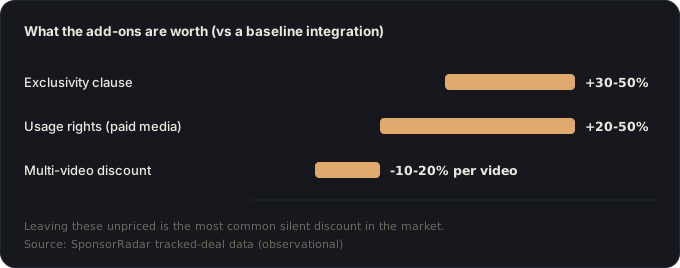
Then price the deliverable, because “a sponsorship” isn’t one product, and here the tracked-deal data puts real numbers on the add-ons. Against a baseline 60-90s integration: exclusivity clauses add a reported 30-50%, usage rights (the brand running your clip as paid ads) add 20-50%, and multi-video packages trade a 10-20% per-video discount for committed volume (SponsorRadar deal data). Dedicated videos price at a multiple of an integration. Leaving these line items unpriced is the most common silent discount in the market: sponsors budget for them and simply won’t volunteer it.
One more use for tracked-deal databases, arguably worth more than the rate table: you can look up which brands already sponsor channels like yours. A brand that sponsored three channels in your niche last quarter is a warm lead with a proven budget: the coldest thing about cold outreach is guessing who buys, and that part is now literally searchable.
The parts folklore skips
Small-channel reality. Under ~20-50k views per video, CPM math produces small numbers, and that’s fine: flat project fees, affiliate deals, and product-plus-fee arrangements dominate there, and micro-creator campaigns are repeatedly reported as the best-converting tier for commerce brands. Charge something beyond product-only whenever there’s an integration; free product “for exposure” prices your endorsement at zero.
Saying no is pricing. Every integration spends audience trust: the same budget your titles spend. A sponsor mismatched to your audience costs more in future retention than the fee pays, and a channel that visibly filters sponsors charges more for the ones it takes.
Disclosure is not optional. YouTube requires ticking the paid promotion disclosure on sponsored uploads, and regulators (the FTC in the US, with equivalents elsewhere) require clear verbal/visible disclosure in the content itself. Do both, every time. It’s the law, and undisclosed deals are the one mistake that burns audience trust and brand relationships simultaneously.
The meta-lesson matches the rest of this blog: the trustworthy numbers here aren’t the ones in anyone’s rate chart. They’re the ones in your own analytics, priced with a method you can defend line by line in a negotiation. Bring the method, not the folklore.
Sources
- SponsorRadar, YouTube sponsorship rates: what brands should pay: niche CPM table and deal-structure premiums from a tracked dataset of 1.3M+ sponsorships across 83K+ brands (observational, not platform-official).
- Influencer Marketing Hub, YouTube influencer rates: a cost guide for brands: survey-based ranges corroborating the same niche ordering.
- YouTube Help, Add paid product placements, sponsorships & endorsements: the required paid-promotion disclosure and platform rules.
- FTC, Disclosures 101 for Social Media Influencers: the US legal disclosure baseline.
- YouTube Help, YouTube partner earnings overview: the ad-revenue split sponsorships are priced against.