Growth & analytics · Lesson 4
The small-channel strategy
Small channels lose head-to-head fights and win asymmetric ones. The four advantages size can't buy (gaps, specificity, speed, and relationship) and the plan that uses all four.
The discouraging math every small creator runs: the big channels have teams, budgets, and a million subscribers’ head start, how does anyone catch up? The honest answer is you don’t, on their terms. You also don’t have to, because the fight isn’t seniority-based:
Each video is evaluated individually and matched with its most interested potential audience: the system doesn’t average a channel’s history or reserve reach for big accounts.
YouTube’s growth & discovery team, via Search Engine Journal (2025)
Every upload is a fresh case argued on its own packaging and satisfaction. What big channels have is warmer launch audiences and production floors: real advantages, but rentable ones. What small channels have, structurally, is four fights the big channel can’t enter.
Fight 1: the gaps
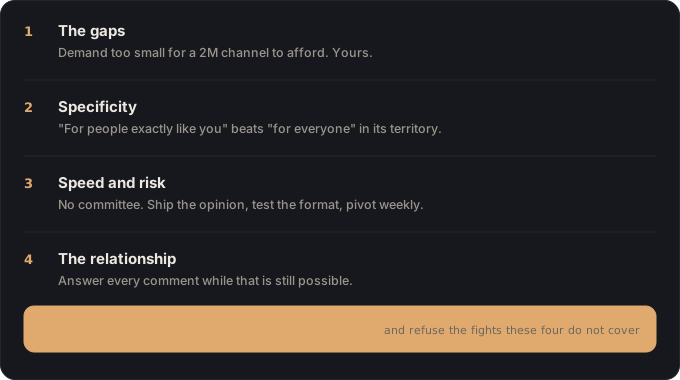
A 2M-sub channel needs 500k-view topics to feed the machine; it literally cannot afford the content gap with 20k searchers and no good answer. You can, and 20k underserved searchers finding the only good answer produces the retention and satisfaction signals that teach the system who your video is for. Small channels grow gap by gap, not hit by hit.
Fight 2: specificity
Scale forces breadth: the bigger the channel, the more general its addressable promise. You can address one viewer with uncomfortable precision (the apartment woodworker, the over-40 beginner runner) and precision wins every matchup inside its territory, because “for people exactly like you” beats “for everyone” whenever both show up. The big channel’s version of your niche video is their Tuesday filler; it’s your entire aim.
Fight 3: speed and risk
No committee, no brand guidelines, no sponsor sensitivities: you can ship the point of view a bigger operation would sand off, test a weird format, pivot next week based on this week’s post-mortem. Iteration speed is a compounding rate: the solo creator who ships, reads, and adjusts weekly is running more experiments per quarter than most funded teams.
Fight 4: the relationship
At 2k subscribers you can answer every comment, notice every regular by name, build the parasocial bond at a depth no big channel can staff. Regulars built this way are disproportionately loyal. They’re your launch-day warmth, your word-of-mouth, and the reason a small channel’s videos can outperform their subscriber count.
The plan that uses all four
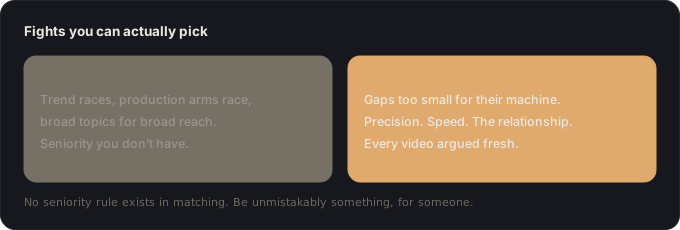
None of these advantages fire passively; the strategy is the loop this course has been assembling all along. Aim at gaps with a precisely-written viewer. Make at full craft: story-checked, promise-true, structure-held, because craft is the input the matchmaking actually prices, and it’s free at every scale. Read every video’s lesson. Compound through series, journeys, and the relationship. And refuse the fights you can’t win: trend-chasing against faster-bigger channels, production-value arms races, breadth. The channels that break out of small aren’t the ones that imitated big. They’re the ones that were unmistakably something for a specific someone, video after video, until the someone’s became a crowd.
The small-channel check
- The current video targets a gap or a precision-promise, not a head-to-head SERP.
- The written viewer is specific enough to embarrass a brand committee.
- At least one experiment per month a big channel wouldn’t run.
- Every comment answered while that’s still possible: the era doesn’t last.
- Zero effort spent on fights the four advantages don’t cover.
🎬 Video script
- Open on the discouraging math, then flip it: the growth team’s own words, every video argued fresh.
- Walk the four fights, each with a real small-channel example winning it.
- Show the big channel’s constraint honestly: why they can’t make your video.
- Assemble the loop on one whiteboard: aim, make, read, compound.
- Close: “Don’t catch up. Be unmistakably something, for someone, and let the votes stack.”
Sources
- Search Engine Journal, YouTube Algorithm Myths Debunked: Insights From The Growth Team (2025): individual evaluation; no channel-size seniority in matching.
- YouTube Help, Explore trends on YouTube: the content-gap tooling the first fight runs on.
Key takeaways
- Small channels win asymmetric fights (gaps, specificity, speed, and relationship) not head-to-head ones.
- Every video is evaluated individually; the system has no seniority rule to wait out.
- The compounding loop is craft × post-mortems × a defined viewer, none of it requires scale.