Titles & packaging · Lesson 3
Curiosity without clickbait
The line between a magnetic title and clickbait isn't intensity. It's whether the video keeps the promise. How to write titles that pull hard and stay honest.
Somewhere along the way “clickbait” became creators’ word for any title that pulls hard, and it scared a generation of honest channels into beige packaging. “Exploring an abandoned mine” sits unclicked while someone else’s “What we found down here shouldn’t exist” takes the same footage to a million views, and the frustrating part is that the second title might be perfectly honest.
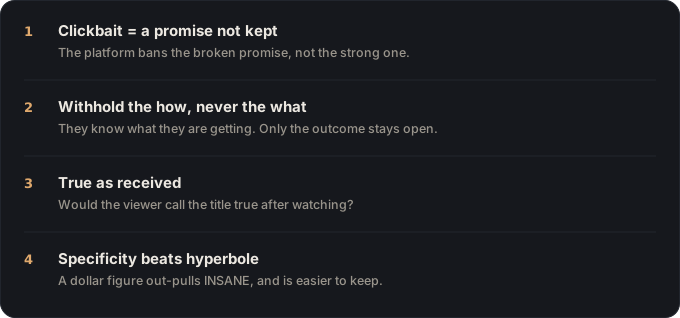
So let’s put the line where it actually is. Clickbait is not intensity, curiosity, or drama. Clickbait is a promise the video doesn’t keep. That’s not just an ethical framing. It’s the platform’s own definition, and the mechanics of the feed enforce it harder than the policy does.
The line, in YouTube’s own words
Malicious clickbait: using maliciously misleading titles, thumbnails, descriptions, or imagery to trick users into clicking on a video that does not deliver what was promised.
YouTube Help, “Spam, deceptive practices, & scams policies”
Read the definition carefully: the offense is does not deliver what was promised. Nothing in the policy caps how compelling the promise is allowed to be. A title can be theatrical, withholding, even alarming, as long as the video pays it off, it isn’t bait, it’s packaging. Veritasium made exactly this argument in a widely-cited video essay on why “clickbait” titles are unreasonably effective for even the most rigorous science channels (search: Veritasium clickbait is unreasonably effective).
And the enforcement that actually touches you day-to-day isn’t a policy strike. It’s the feedback loop from the hooks module: an over-promised click produces a fast early exit, and a high-CTR video that people abandon in thirty seconds reads to the algorithm as a lie confirmed. Viewers punish clickbait faster than YouTube does.
Withhold the how, never the what
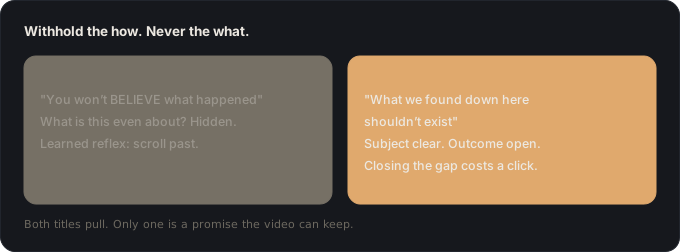
The honest-curiosity move has a simple shape: the viewer should know exactly what they’re getting, and be unable to guess how it turns out.
“What we found down here shouldn’t exist” passes: you know precisely what you’re getting (an abandoned-mine exploration with an anomalous find), and you can’t resolve it without watching. “You won’t believe what happened” fails in the opposite way: it withholds the what itself, the subject, the genre, the deal. Empty mystery isn’t curiosity, it’s a form the viewer has learned to ignore, because titles that hide the subject are usually hiding that there isn’t one.
A useful test: after watching, would the viewer say the title was true? Not “technically true”: true the way they understood it when they clicked. “I quit YouTube” over a video about taking two weeks off is technically defensible and a lie as received. The title’s meaning at click time is the promise; that’s the thing the video has to keep.
Specificity pulls harder than hyperbole
When a title needs more pull, the amateur move is to inflate the adjectives: insane, unbelievable, destroyed. Inflation is weak because it’s unfalsifiable; the viewer’s scroll-hardened brain discounts it to zero. The stronger move is almost always to get more specific: numbers, conditions, named consequences. “This mistake cost me $4,000” out-pulls “My INSANE workshop disaster” while making a promise that’s easier to keep, because specifics prove there’s a real event under the title. Hyperbole hides a vague video; specificity advertises a concrete one.
That’s also why honest curiosity compounds. Every kept promise teaches your audience that your titles mean what they say, so your next strong title gets believed (and clicked) at face value. Channels that burn that trust need ever-louder packaging to earn the same click, which is the actual clickbait death spiral: not a ban, just an audience that stopped believing you.
The honest-curiosity check
- The viewer knows what they’re getting; only the outcome is withheld.
- After watching, a reasonable viewer would call the title true, as they understood it at click time.
- The payoff moment the title points at actually exists in the video, and arrives when expected.
- Any number or claim in the title survives a skeptic pausing on it.
- You’d be comfortable pinning the title as a comment under the finished video.
🎬 Video script
- Open on two titles for the same mine footage (the beige one and the magnetic one) and reveal the twist: the “clickbait-looking” one is completely honest.
- Put YouTube’s actual policy definition on screen; underline “does not deliver what was promised.” The crime is the broken promise, not the pull.
- Demonstrate “withhold the how, never the what” by fixing an empty-mystery title live.
- Show why specificity beats hyperbole: swap INSANE for a dollar figure and watch the promise get both stronger and easier to keep.
- Close: “Pull as hard as the video can pay off. That’s the whole rule.”
Sources
- YouTube Help, Spam, deceptive practices, & scams policies. YouTube’s definition of malicious clickbait as promising what the video doesn’t deliver.
- YouTube Help, Measure key moments for audience retention: early abandonment is read against your packaging; the feed enforces honesty faster than policy.
Key takeaways
- Clickbait isn't a strong promise. It's a promise the video doesn't keep.
- Withhold the answer, never the subject; the viewer should know exactly what they're getting, just not how it lands.
- Every unkept promise spends audience trust you can't buy back.