Growth & analytics · Lesson 5
Compound with series and formats
One-off videos start from zero; series and formats inherit. How repeatable structures compound audience, craft, and production speed, and when to retire one.
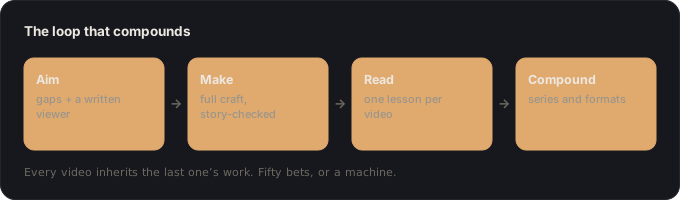
Fifty videos in, channels tend to sort into two shapes. One is a pile: fifty individual bets, each starting from zero, new premise to explain, new audience to find, new packaging to invent. The other is a machine: a few recurring structures where every new video inherits the last one’s work, its audience, its craft lessons, its production system, its next-video handoff. Same effort per video; wildly different compounding. The difference is series and formats, and they’re the last piece of the growth loop.
What compounds, exactly
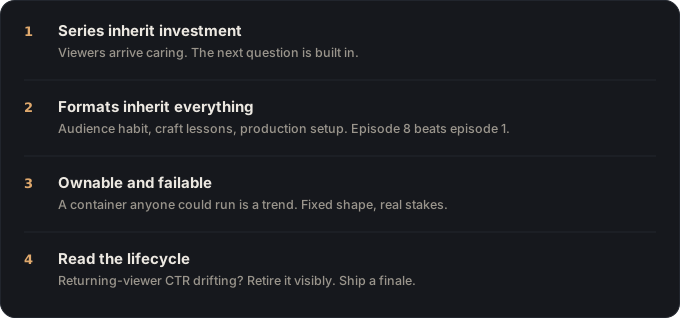
A series is a narrative container: the shop rebuild, the year of marathon training, episodes connected by an ongoing story whose stakes carry across videos. Each episode inherits investment: viewers arrive already caring, the ending’s next question is built-in, and the playlist journey does the session work automatically. Series are also retention insurance: the countdown-arc logic at channel scale.
A format is a promise container: the budget-gear gauntlet, the 24-hour build, the myth-vs-math breakdown, a repeatable shape whose title pattern the audience learns to recognize and want. Formats compound three things at once. Audience habit: regulars learn what the shape delivers and click on recognition, the format name becomes its own promise. Craft: every post-mortem lesson applies directly to the next instance instead of approximately to a different video; format episode eight is structurally better than episode one in ways one-offs never accumulate. Production: the shot list, the rig, the beat skeleton are already built, a format episode costs a fraction of a one-off at equal quality.
The strategic shape for a solo channel: one or two formats plus an occasional series, with room deliberately left for one-offs, the experiments that find your next format. Your existing outliers are the search already run: the mechanism you extracted from a hit is precisely a format candidate, voted for in advance.
Design the container honestly
A format is a promise made at channel scale, so it inherits the whole honesty contract: the shape must deliver every time, because one hollow episode taxes the recognition-click that makes the format work at all. Design for repeatability without sameness: the container fixed, the contents genuinely at stake each episode; if an episode can’t fail, the format is a template, and templates habituate. And keep the container ownable: a format anyone could run is a trend; a format only you could run, your access, your stakes, your point of view, is a moat.
Read the lifecycle
Formats age. The signals are in the weekly numbers: the format’s CTR drifting down among returning viewers (recognition turning to skip), your own energy reading as routine on camera, episode post-mortems converging on “competent, unremarkable.” That’s not failure. It’s a season ending. Retire it visibly (audiences respect an ending; it’s a payoff), archive what compounded (the craft, the audience, the production system all transfer) and promote the next format from your experiments. Channels die of formats outliving their audience’s interest far more often than they die of change.
The compounding check
- The channel runs one or two named formats the audience could describe.
- Each format episode inherits: skeleton, rig, playlist, and the last post-mortem’s lesson.
- Every episode can genuinely fail: the container is fixed, the outcome isn’t.
- One-off experiment slots stay open; outlier mechanisms feed the format pipeline.
- Format vitals (returning-viewer CTR, your own energy) read quarterly; endings shipped on purpose.
🎬 Video script
- Open on the two fifty-video channels side by side (the pile and the machine) with identical effort counters.
- Define series vs format in one line each, with the inheritance list on screen.
- Build a format live from a real outlier’s extracted mechanism: name, title pattern, skeleton, rig.
- Show a format’s decline in the returning-viewer data, and retire it on camera with a finale.
- Close: “Fifty bets, or a machine that inherits. Same effort. Choose the one that compounds.”
Sources
- YouTube Help, Understand new, casual, & regular viewers: the recognition-and-habit loop formats build in the regular segment.
- YouTube Help, Add end screens to videos: the session machinery series inherit for free.
Key takeaways
- One-offs restart the machine every time; series and formats let each video inherit the last one's work.
- A format is a repeatable promise-shape. It compounds craft, production speed, and audience habit at once.
- Formats have lifecycles; read the returning-viewer data and retire them before they retire you.