Growth & analytics · Lesson 3
Double down on outliers
An outlier is your audience voting with someone else's attention. How to read what actually worked, feed the surge, and follow up without becoming a copy of your one hit.
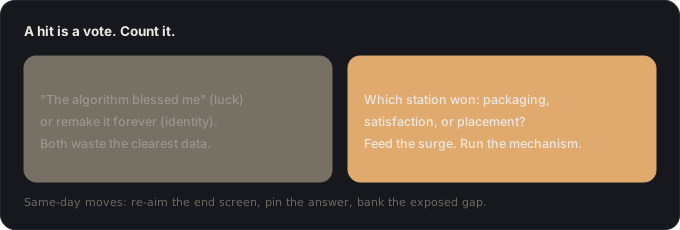
Sooner or later a video breaks your pattern (five, ten, fifty times your normal reach) and the two reflexive responses are both wrong. Treating it as luck (“the algorithm blessed me”) wastes the clearest data your channel will ever produce. Treating it as a new identity (make that video forever) turns a channel into a tribute act to its own hit. The correct read is colder: an outlier is your audience, and the lookalike audiences the system matched you to, voting at scale. The job is to count the vote correctly, feed the surge while it’s live, and follow up on what actually won.
First: diagnose what actually worked
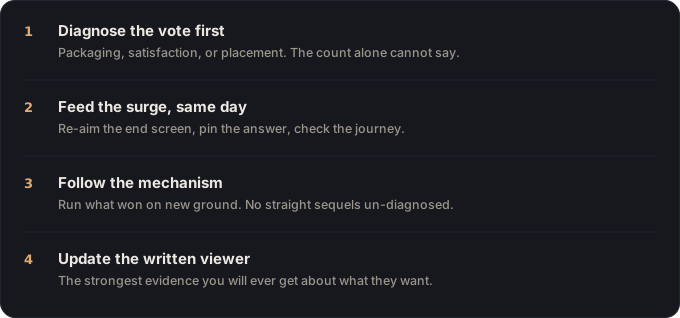
Run the post-mortem stations on the success: which part over-performed? An outlier driven by packaging (CTR way above baseline, retention normal) is a vote for the promise: the title/thumbnail angle found a nerve; the video merely kept up. One driven by satisfaction (normal CTR, retention and session handoff exceptional) is a vote for the content: the matchmaking widened because finishers kept signaling quality. One driven by a traffic-source spike (suggested traffic beside a bigger video, a search trend, an external link) is a vote about placement: real, but rented. Three different votes, three different follow-ups, and you can’t tell which you got from the view count alone.
Remember the timing lesson too: videos surge weeks or months after upload (the growth team says so directly) so run this diagnosis whenever the outlier happens, not just launch week. The back-catalog sleeper is the same vote, arriving late.
Feed the surge
While the outlier is hot, thousands of first-time viewers are meeting your channel through one video, and what they do next depends on what you’ve laid in their path. The moves, all same-day cheap: re-aim the outlier’s end screen at your strongest related video (not your newest, your strongest); pin a comment answering the question the comments keep asking, with a path deeper into the catalog; check the playlist journey the video sits in, order, name, next step; and if the surge exposes a gap (“where’s the part two?”), that request goes to the top of the bank with the strongest receipt you’ll ever hold.
Follow up on the mechanism, not the surface
The sequel instinct (“make it again, bigger”) copies the surface. The compounding move extracts the mechanism and runs it again: if the vote was packaging, that promise-shape has siblings (the same format family aimed at adjacent topics). If the vote was satisfaction, identify what the video did structurally: the stakes, the complication, the payoff density, and make different videos that do that. If the vote was placement, understand whose audience you borrowed and whether your differentiator survived the visit.
Do this honestly and the outlier reshapes the channel without flattening it. You’re not remaking the hit, you’re updating your written viewer with the strongest evidence available about what they want from you. The tribute-act failure mode comes from skipping the diagnosis: copying what’s visible (topic, thumbnail style) instead of what worked (the mechanism), until the pattern itself is the thing the audience habituates to.
The outlier check
- The over-performing station named (packaging, satisfaction, or placement) before any strategy changes.
- Same-day surge feeding: end screen re-aimed, comment pinned, playlist checked.
- The gap the surge exposed banked with its receipt.
- The follow-up runs the mechanism on new ground; no straight sequels without the diagnosis to justify one.
- The written viewer updated with what the vote taught.
🎬 Video script
- Open on the analytics spike: “This is the most information your channel will ever hand you in one week. Most creators celebrate instead of reading it.”
- Run the three-vote diagnosis on a real outlier: reveal which station actually won.
- Do the surge-feeding moves live, all four, timestamps running.
- Contrast two six-month follow-ups: the tribute act vs the mechanism extractor.
- Close: “A hit is a vote. Count it, feed it, and run what won, not what showed.”
Sources
- Search Engine Journal, YouTube Algorithm Myths Debunked: Insights From The Growth Team (2025): individual evaluation and late surges: outliers can arrive months after upload.
- YouTube Help, Understand new, casual, & regular viewers: the first-time-viewer wave an outlier delivers, and what converting it means.
Key takeaways
- An outlier is data, not luck, diagnose which station it crushed before deciding what it means.
- Feed the surge with your catalog (end screens, playlists, pinned paths), not just your feelings.
- Follow up on the mechanism, not the surface, the angle that worked, not a copy of the video.