Ideas & audience · Lesson 5
Build an idea bank that never runs dry
The difference between channels that publish steadily and channels that stall isn't inspiration. It's a system: capture everything, bank it with its evidence, and review on a schedule.
Ask a stalled channel what happened and you’ll rarely hear “I ran out of skill.” You’ll hear “I didn’t know what to make next”, which, decoded, means the channel ran on inspiration, and inspiration is a terrible supply chain: abundant the week you don’t need it, absent the night before a shoot. The fix isn’t being more creative. It’s logistics: a bank that captures ideas when they’re cheap and serves them back when they’re needed.
Three rules make a bank work. Everything else is tooling preference.
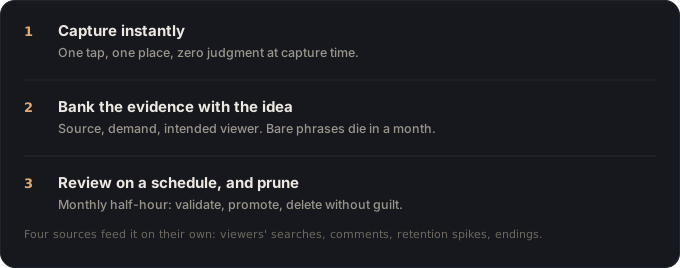
Rule 1: capture instantly, appraise later
Ideas arrive at the worst times (mid-edit, mid-shower, mid-someone-else’s-video) and they don’t come back. So capture has to be frictionless and judgment-free: one tap, one line, into one place (a note, a board, a spreadsheet, the tool doesn’t matter; having exactly one does). The appraisal: is this any good?: happens later, at review time, never at capture time. Judging at capture kills the two best categories: the embarrassing idea that’s actually a point of view, and the half-idea that pairs with another half-idea three weeks later.
Rule 2: bank the evidence with the idea
An idea filed as a bare phrase: “van insulation??”: is worthless in a month; you’ll stare at it with no memory of why it mattered. File it with its receipt: where it came from, what demand it answers, which viewer it serves. The platform hands you receipt-bearing sources continuously:
- The Research tab’s saves. YouTube’s own bank for searches and gap topics you flag, demand evidence included.
- Comments: every recurring question is a request; every argument in your comments is a video with built-in stakes.
- Your retention graphs: spikes mark what viewers rewound to see; a spike is your audience voting for a whole video about that moment.
- The video you just finished: every honest ending exposes the next question; bank it while it’s warm.
An entry with a receipt walks into validation half-passed: the demand gate is already documented.
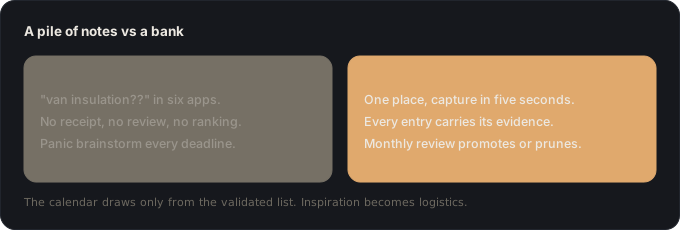
Rule 3: review on a schedule, and prune
The bank only pays if it’s read. A fixed monthly half-hour: run the promising entries through the validation gates, promote the survivors to a short “validated, ready to plan” list (the only list your calendar is allowed to draw from) and prune. Ideas expire: the trend passed, the gap got filled, you stopped caring. Deleting them isn’t waste, it’s the system working; a bank silted up with dead entries stops being read, and an unread bank is a diary. (The capture note and the graveyard both have a second life: patterns in what you keep banking (and what keeps dying) are the clearest picture of who your viewer actually is you’ll ever get.)
The payoff compounds quietly. Month one, the bank saves you a panicked brainstorm. Month six, your calendar plans from a validated list instead of a blank page, off-weeks stop becoming off-months, and (the part nobody advertises) your average idea gets better, because ideas chosen from thirty candidates beat ideas invented under deadline every single time.
The idea-bank check
- One capture point, reachable in five seconds, used without judgment.
- Every entry carries its receipt: source, demand, intended viewer.
- The four flowing sources (searches, comments, spikes, endings) feed it weekly without effort.
- A scheduled monthly review promotes to a validated list and prunes the dead.
- The content calendar draws only from the validated list.
🎬 Video script
- Open on the 11pm blank-page panic, then the same night with a bank: choosing from thirty receipted ideas. “Same creator. Different logistics.”
- Walk the three rules fast, with the capture-judgment failure acted out.
- Tour the four flowing sources on screen (Research saves, a comment thread, a retention spike, an ending) banking one idea from each.
- Run a monthly review live: validate, promote, and delete without guilt.
- Close: “Inspiration is weather. Build a reservoir.”
Sources
- YouTube Help, Explore trends on YouTube: saving searches and topics in the Research tab.
- YouTube Help, Measure key moments for audience retention: spikes as rewatched moments: audience demand data, per video.
Key takeaways
- The bank has three rules: capture instantly, store the evidence with the idea, review on a schedule.
- Your best sources are already flowing, comments, searches, retention spikes, and the videos you just made.
- An idea bank isn't a backlog of obligations; ideas expire, and pruning is part of the system.