Ideas & audience · Lesson 3
Validate an idea before you shoot
A shoot is the most expensive way to test an idea. Four cheaper tests, packaging-first, the demand receipt, the comparable check, and the one-sentence story test. That kill weak ideas in an afternoon.
Every dead video was once an idea somebody was excited about. The excitement isn’t the problem (it’s the only fuel there is) but excitement untested is how creators spend a shoot day, a week of editing, and a launch’s worth of hope discovering what an afternoon of validation would have told them for free. You check the footage before the edit; this is the same discipline moved one step earlier: check the idea before the shoot.
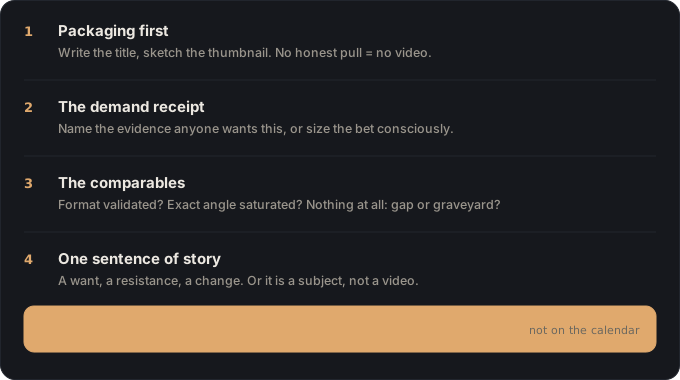
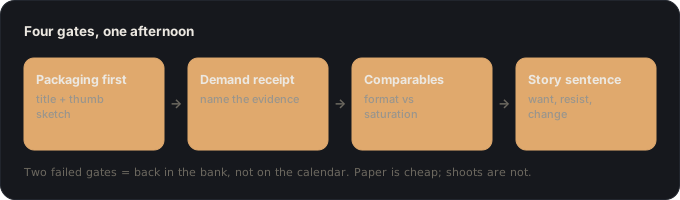
Four tests, cheapest first. An idea that fails two of them isn’t ready to shoot.
Test 1: write the packaging first
Before anything else, try to write the title and sketch the thumbnail: final-quality, as if publishing tomorrow. This is the fastest kill-test there is, because an idea that can’t produce an honest title that pulls is announcing that the video won’t pull either: no promisable outcome, no felt stakes, no addressee. If you find yourself reaching for empty-mystery phrasing to make it sound interesting, the idea is under-specified: the title is telling you what’s missing. Packaging-first isn’t a marketing trick; it’s the idea’s first contact with the question “why would anyone click this?”, asked while changing the answer still costs nothing.
Test 2: find the demand receipt
Name the evidence that anyone wants this: concretely, not vibes. A Research-tab search or content gap. A question that keeps recurring in your comments. A problem your audience messages you about. YouTube’s own definition of a gap (real searches, inadequate results) is the strongest receipt a small channel can hold, but any traceable demand beats none. No receipt doesn’t always mean no video (genuinely novel ideas create demand rather than answer it) but it means you’re consciously making a bet, and bets should be sized: a receipt-less idea is a fine risk for a normal week, a bad one for your once-a-quarter mega-project.
Test 3: run the comparables
Search the idea and study what exists, not to be discouraged, but to read the market like an investor reads a sector. Strong comparables on adjacent topics (similar videos performing well relative to their channels’ size) validate the format: audiences demonstrably watch this kind of thing. A crowded field of strong recent results on your exact angle means the demand is taken. You need a differentiator or a different idea. Nothing at all is the ambiguous reading: either a gap or a graveyard, and the honest next question is which. While you’re there, note how the successful comparables packaged themselves: their promises tell you what the audience already responds to, which is swipe-file material, not homework to copy.
Test 4: say the story in one sentence
Last gate, and the one that catches ideas the other three let through: say the story (not the topic) in one sentence. Someone wants something, something resists, something changes. “A video about my workshop reorganization” fails. “I have one weekend and $200 to turn the garage that embarrasses me into a shop I’ll show on camera, or admit the problem was never the space” passes. If the sentence has no want, no resistance, and no possible change, you don’t have a video yet. You have a subject, and the beat sheet will be an act of fiction.
An idea that clears all four gates in an afternoon has earned its shoot day, and the artifacts aren’t throwaway: the packaging from test 1 and the sentence from test 4 are the start of the beat sheet.
The validation check
- A publishable title and thumbnail sketch exist: written before any footage.
- The demand receipt is named, or the no-receipt bet is consciously sized.
- Comparables read: format validated, field not saturated on your exact angle.
- The story fits one sentence with a want, a resistance, and a change.
- Two or more failed gates = the idea goes back in the bank, not on the calendar.
🎬 Video script
- Open on a timeline littered with a dead video’s edit files: “This video failed in March. It could have failed in February, on one page of paper.”
- Run the four gates live on two real ideas: one clears, one dies at the title test, on camera.
- Show the ambiguous nothing-exists case and how to size the bet.
- End with the payoff: the passed idea’s packaging and sentence dropped straight into a beat sheet.
- Close: “An afternoon of no is cheaper than a month of maybe.”
Sources
- YouTube Help, Explore trends on YouTube: content gaps and viewers’ searches as demand evidence.
- YouTube Help, A/B test titles & thumbnails: the platform’s own packaging-first logic: titles and thumbnails are testable variables, which is why they make the cheapest pre-shoot test.
Key takeaways
- Validate before the shoot, a dead idea costs an afternoon on paper and a month on the timeline.
- Write the packaging first: if no honest title pulls, the video won't either.
- Comparables test the format; gaps test the demand; neither replaces having a story.