Publishing & SEO · Lesson 3
End screens, cards, and playlists
The three built-in tools that turn one view into a session, what each is actually for, where they help, and the misuse that turns them into noise.
A single watched video is a visit. A viewer who watches two, three, four of your videos in a sitting is building a relationship: the casual-to-regular pipeline that channels actually grow on, and YouTube ships three built-in tools whose entire purpose is converting the first into the second. Most creators technically use all three and functionally use none: elements get attached because the upload flow suggests them, aimed at nothing in particular, doing nothing in particular. The fix is knowing what each tool is for.
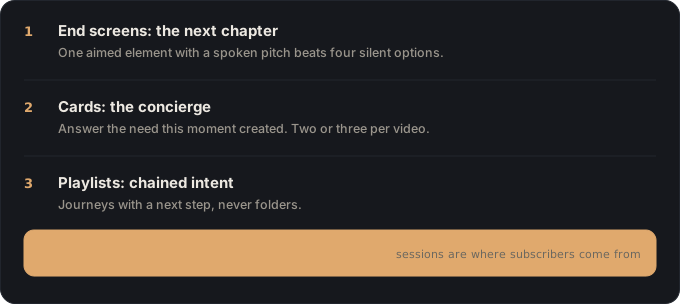
End screens: the story’s next chapter
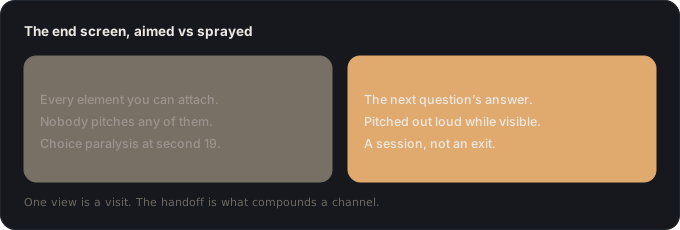
The mechanics, officially: the last 5-20 seconds, up to four elements, videos, playlists, subscribe. The craft was the retention module’s closing lesson: land the payoff, skip the outro graveyard, and pitch what’s behind the door while the door is on screen, ideally pointing at the next question this video opened.
The publishing-side additions: fewer elements, aimed harder. One video element with a spoken pitch outperforms four silent options: choice paralysis is real at second nineteen. Prefer “Best for viewer” when your catalog is deep (it personalizes per viewer), a specific video when the story chains (“the test this failure demanded”). And shoot for it: the blocking you planned in the shot list (wide, simple, no action in the corners) is what makes the elements land on design instead of on your face.
Cards: the mid-video concierge
Cards are the small “i” pop-up available throughout the video, and they’re not a mini end screen. Nobody abandons mid-story because a corner suggested it; a card’s honest job is answering a need the current moment created. You reference the earlier build: card to it, right there, for the viewer who needs the context. You say “I tested this claim properly in another video”: card. The prerequisite, the deep-dive, the setup this payoff assumed: cards. Aimed like that, a card is service; sprayed evenly, it’s a banner ad on your own video. Two or three per video at the moments that create the need, teased verbally when it matters (“card up here if you want the full math”).
Playlists: chaining intent
Playlists are the quiet one (autoplaying the next video in a sequence viewers chose to enter) plus a discovery surface of their own (they surface in search, and end-screen elements can point at them). Their power is intent-matching: a viewer three videos into your workbench series has told you exactly what they want next, and the playlist delivers it with zero decision cost.
The craft rule: build playlists as journeys, not folders. “All my videos, newest first” is a folder. It chains nothing. “The workshop rebuild, in order” is a journey with a natural next step at every ending; order it by narrative, name it like a promise (“Rebuilding the shop from scratch”), and link the playlist URL (not the bare video) wherever the series is the product: descriptions, pinned comments, the end screen. This is also where deliberate series planning pays compound interest: a channel structured in journeys generates its own next-video answer for every viewer, every time.
The session check
- Every end screen: payoff landed, one aimed element, spoken pitch, shot-for blocking.
- Cards answer needs the moment created: two or three, teased when load-bearing.
- Playlists are ordered journeys with promise-names, not folders.
- Series links point at playlists; standalone links point at videos.
- Each element placed this week can say what it’s for in one sentence.
🎬 Video script
- Open on session analytics: one-video visitors vs three-video sessions, and where subscribers actually come from.
- Tour the three tools with their one-line jobs: next chapter, concierge, chained intent.
- Fix a real upload live: four silent end-screen elements → one aimed with a pitch; sprayed cards → two placed needs.
- Rebuild a folder-playlist into a journey and rename it as a promise.
- Close: “One view is a visit. Aim the furniture, and visits become sessions.”
Sources
- YouTube Help, Add end screens to videos: mechanics: final 5-20 seconds, up to four elements, best-for-viewer option.
- YouTube Help, Add info cards to videos: card mechanics and placement.
Key takeaways
- These are session tools, their job is the next video, and sessions are where channels compound.
- End screens continue the story; cards answer mid-video needs; playlists chain intent.
- Every element earns its slot with a reason, unaimed elements are furniture, not funnels.