Publishing & SEO · Lesson 2
Descriptions, chapters, and tags that matter
YouTube says it plainly, tags barely matter, the description's first lines do, and chapters help viewers navigate. The metadata hierarchy by official weight, not folklore.
YouTube metadata advice is a geology of dead eras: tag-stuffing rituals from 2012, keyword-density folklore imported from blog SEO, upload-hour numerology. Creators dutifully maintain all of it, which has a real cost, not the wasted ten minutes, but the misallocated attention: every minute spent curating thirty tags is a minute not spent on the metadata that platform documentation says actually carries weight. So here’s the hierarchy, sourced from the platform rather than the folklore.
Tags: the platform’s own eulogy
No interpretation needed: the official help page on tags reads:
Tags can be useful if the content of your video is commonly misspelled. Otherwise, tags play a minimal role in your video’s discovery: your title, thumbnail, and description are more important pieces of metadata.
YouTube Help, “Add tags to your YouTube videos”
That’s YouTube telling you, in its own documentation, to stop. The honest tag workflow in 2026: add a handful covering your name and genuinely-misspellable terms, and reclaim the ritual time. Any guide whose YouTube SEO strategy leads with tags is dated by its own table of contents: a useful freshness test for everything else it says.
The description: two lines that work, and the rest
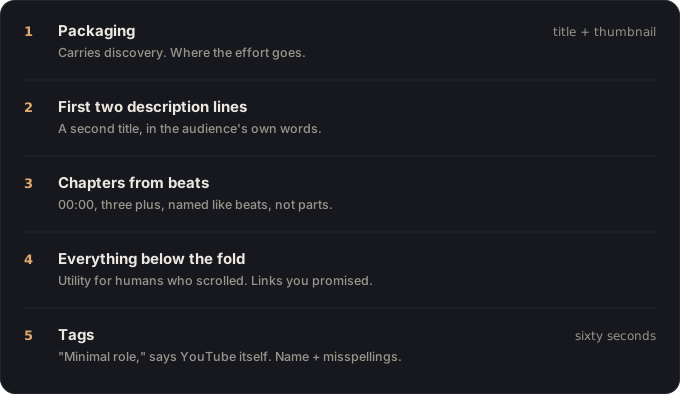
The description’s power is unevenly distributed. The first two lines appear in search results and above the fold. They’re packaging, read by humans deciding whether to click and by the systems matching the video to interests. Write them like a second chance at the title’s promise: what the video delivers, for whom, in natural language that uses the words your audience actually searches, because that’s how the searcher recognizes their query answered, not because of density arithmetic. Keyword-stuffed first lines read as spam to the one audience that matters: the human hovering the click.
Below the fold is utility space, and utility is honestly valuable: links you promised, gear, sources, the end-screen video by URL, timestamps. Nobody’s discovery hinges on paragraph four: write it for the viewer who scrolled down wanting something.
Chapters: navigation first, discovery second
Chapters are the metadata with an underrated retention angle. The mechanics, per the official page: timestamps in the description, first one at 00:00, at least three, each 10+ seconds, or let auto-chapters do it, which forfeits the naming. Name them yourself, off your beat sheet: your beats are your chapters, and beat-named chapters (“The crack nobody noticed”) sell continued watching in a way process labels (“Part 2”) don’t.
The counterintuitive part: letting viewers skip helps you. A viewer who jumps to the section they need is a satisfied search result; the same viewer forced to scrub manually is an exit. Chapters show up in search for long videos, they make your key-moments graph beat-legible for free, and they cost ninety seconds if the beat sheet exists.
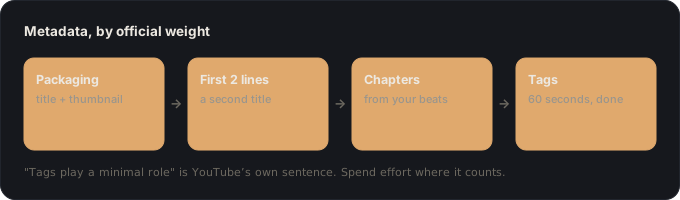
The whole hierarchy in one line: packaging (title + thumbnail) → first two description lines → chapters → everything else → tags. Effort should flow in that order, and mostly stop at the arrow before tags.
The metadata check
- First two description lines: a second promise, human-readable, in the audience’s own words.
- Chapters named from beats. 00:00 start, three-plus, ten-seconds-plus each.
- Below-fold description delivers everything the video promised in links.
- Tags: five minutes lifetime, name variants and misspellings, done.
- No metadata ritual survives that the current official docs don’t support.
🎬 Video script
- Open on a 34-tag upload form, then YouTube’s own “minimal role” line on screen: “The platform wrote the eulogy. Creators keep holding the funeral.”
- Rank the hierarchy on a whiteboard by official weight.
- Rewrite a real description’s first two lines from keyword-paste to second-title, live.
- Build chapters from a beat sheet in ninety seconds; show the skip-to-section as satisfaction, not loss.
- Close: “Spend metadata effort where the platform says it counts. It told you where.”
Sources
- YouTube Help, Add tags to your YouTube videos: tags play a minimal role; title, thumbnail, description carry discovery.
- YouTube Help, Video chapters: chapter mechanics: 00:00 start, three minimum, ten seconds each, auto-chapters.
Key takeaways
- YouTube's own words: tags play a minimal role, title, thumbnail, and description carry discovery.
- The description's first two lines are packaging real estate; write them like a second title.
- Chapters are a viewer-navigation feature with search benefits, structure them from your beats.