Filming basics · Lesson 2
Light the face, not the room
One light, placed right, beats five placed wrong, because the viewer's attention lives on your face. The window setup, the one-light setup, and the mistakes that make footage feel off.
Lighting advice arrives at beginners as a shopping list (three-point kits, RGB tubes, softboxes with names) and produces a predictable outcome: a lit room and a face that still looks slightly wrong. Meanwhile the actual job is small and specific. Viewers spend most of a talking video looking at your face; it’s where the emotion your story runs on is read, it’s what your thumbnail sells, and human attention is ruthlessly drawn to it. Light that one surface well and nobody notices the room. Light the room instead and everybody notices the face.
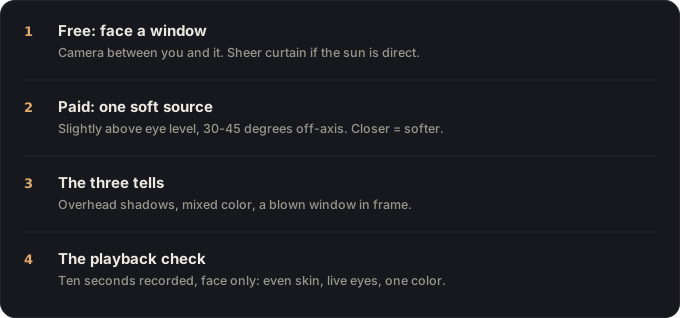
The free setup: face a window
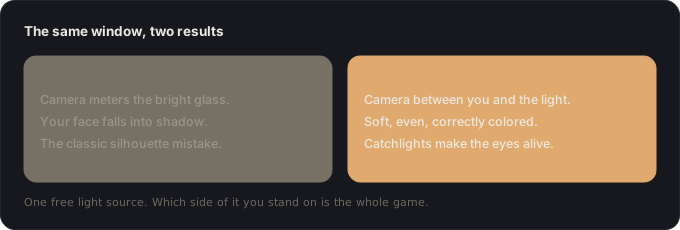
The best beginner light isn’t for sale. A window with indirect daylight is a giant, soft, correctly-colored source, and the setup is one sentence: face the window, put the camera between you and it. Soft frontal light fills the face evenly, eyes get catchlights (the little sparkle that reads as “alive”), and skin looks like skin.
The same window placed behind you produces the classic beginner shot (a silhouette against a blown-out white rectangle) and placed hard to the side, a half-shadowed face that reads moodier than your content wants. When the window’s behind you, you haven’t added light to your video; you’ve added it to the camera’s enemies.
Sunset-direct sun through the glass breaks the “indirect” part: harsh stripes, squinting. Sheer curtain fixes it; that’s the whole trick softboxes are imitating.
The paid setup: one light, high and off-axis
When the window fails you (night shoots, dark rooms, consistency across days) replicate it: one soft light source, slightly above eye level, 30-45° off to one side of the camera. Above eye level because that’s where light comes from in every environment your viewer’s brain calibrated on; off-axis because dead-frontal light flattens features. Bigger and closer = softer; a cheap LED panel bounced off a white wall or through a diffuser outperforms an expensive one aimed bare.
That’s genuinely most of it. The second light, if you ever buy one, isn’t for your face. It’s a dim warm source somewhere in the background, separating you from the wall and making the room read intentional. Nice, optional, tenth-as-important.
The three tells
Diagnose your current footage against the three things that make video feel “off” to viewers who can’t say why:
Overhead shadows. The ceiling fixture puts sockets in your eye holes and a shadow under your nose. If you shoot under room lights, that’s the look. Turn them off; use the window or your one light.
Mixed color. Blue daylight on one cheek, orange lamp on the other: skin goes corpse-ish and no filter fixes it cleanly. One dominant source; kill or match the rest.
The blown background. Any window in frame meters your face into shadow or blows itself into a white void. Reframe or close the blinds: the exposure can’t serve both.
The check that catches all three: record ten seconds, play it back, and look only at your face, even skin, live eyes, no color split? Ship it. This is the same monitored-test ritual as audio, and like audio, lighting disasters are cheap at take one and a reshoot by the edit.
The light check
- Your face is lit before the room is even considered.
- Window setup: you face it, camera between; or one soft source, high, 30-45° off-axis.
- Overheads off; one dominant color temperature.
- No light source in frame fighting your exposure.
- Ten-second playback checked on every new setup: face only.
🎬 Video script
- Open with the same face shot four ways in fifteen seconds: window behind, overhead only, mixed color, then right. No commentary until the last one: “One light moved. Different channel.”
- The window setup demonstrated with a phone and a chair: zero dollars on screen.
- Build the one-light version, showing soft/close/off-axis each doing its job.
- Run the three tells on real submitted footage, diagnosing each one aloud.
- Close: “Light the sixty square inches viewers actually look at. The room is set dressing.”
Sources
- YouTube Help, Thumbnail & title tips: the face as the packaging’s focal point; the lit face is what makes the thumbnail frame usable.
- Paul J. Zak, Why Your Brain Loves Good Storytelling, Harvard Business Review (2014): emotional resonance carries attention, and on camera the face is where it’s read.
Key takeaways
- The face is where attention and emotion live, light it first and the room takes care of itself.
- The free setup: face a window, camera between you and it.
- Fix the three tells (overhead shadows, mixed color, blown backgrounds) before buying anything.