Sep 24, 2026 · by Baptiste, founder of Vanpelt Studio
How to make YouTube videos for TV: lessons from a channel that took its TV audience from 8% to 38%
Part of YouTube updates for creators: official YouTube changes, explained in plain English.
For a lot of people, YouTube is TV now. YouTube says viewers watch over a billion hours of it on TV screens every day, and Nielsen’s 2026 numbers put it ahead of every media company in US TV watch time. Yet most creators still make every video as if it will be watched alone, on a phone, on a bus.
Kevin Langue didn’t. On YouTube’s official Creator Insider channel, he explained how his channel went from 8% of viewing on TV to about 38% in a year, by treating his videos like a TV show. This article sums up what he said, adds what YouTube itself has said about TV viewers in 2026, and turns it into seven moves you can use on your own channel.
When you need it: your videos are long, but your audience treats them like a quick phone watch. Or you’ve looked at your analytics, seen TV climbing, and don’t know what to do differently for it.
Kevin Langue on making a show for the living room, from YouTube’s Creator Insider channel (about 2 minutes).
What Kevin Langue said
The clip is short, and nearly every line is usable:
- His show is made for the TV on purpose. The idea is simple: grab friends, grab the family, grab the popcorn. The video is built as something a room watches together, not something one person scrolls past.
- He borrows from TV formats that have lasted decades. He named shows like Survivor and The Price Is Right. What he takes from them is familiarity (viewers know the rules) and camaraderie (they play along, guess together, and feel part of something).
- He uses appointment viewing. New episodes go out every Saturday at 9 a.m., and he runs the channel like a traditional media show. He credits that with growing his TV audience.
- The hard part isn’t being consistent. It’s being consistently good. And every so often a channel hits a ceiling and has to reinvent itself, which he describes as a sideways move rather than a step up.
- A great idea still needs “legs”. When he loves an idea that he doesn’t think will perform, his job is to make it perform: the title and thumbnail are what turn a good idea into one that works on YouTube.
- Just press publish. The best advice he got from other creators (he names Colin and Samir) was to stop perfecting and upload. Deadlines, he says, have saved his team, because a creative could give notes on the same video forever. His high-school art teacher’s version: the teacher’s job is to take the paper away.
What YouTube says about TV viewers
Kevin’s approach lines up with what YouTube itself explained in two other official videos this month:
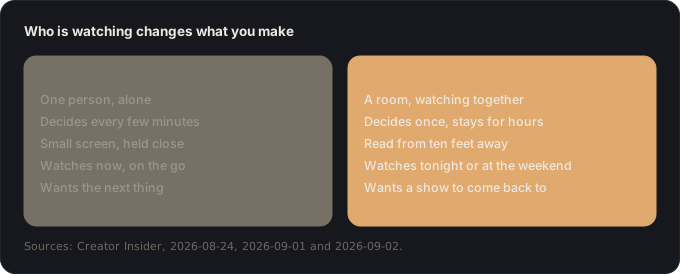
- TV viewers want longer videos, and YouTube follows them. YouTube’s discovery lead said long-form is growing because people watching on TV ask for it, not because the platform pushes it. (Our summary of that conversation.)
- Series work on TV because viewers don’t want to pick up the remote every ten minutes. They choose a show once and stay with it.
- Long videos get saved for later. People often keep a long video for the TV in the evening or at the weekend, which is one reason its first hours say so little.
- On TV, time watched may count for more than the click, because signals are weighted differently by device.
- TV viewing is often a group activity. That’s why YouTube added views (co-viewed), an estimate of how many people are in the room. (How that metric works.)
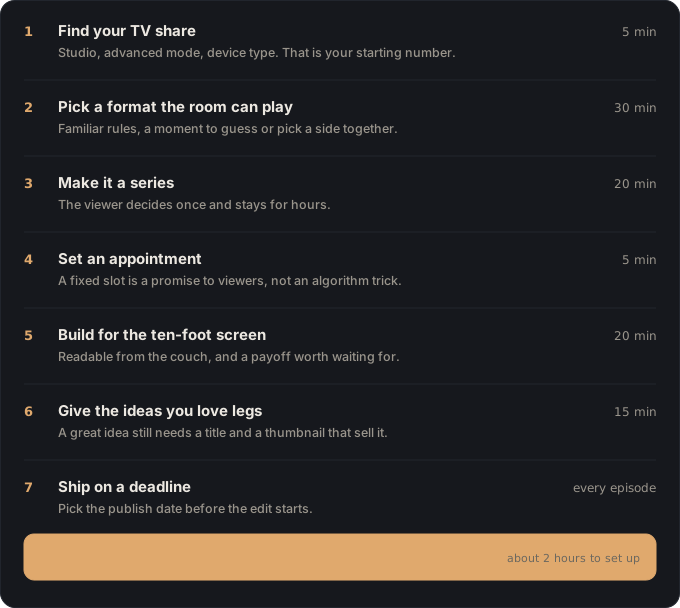
How to make YouTube videos for TV: seven moves
One example runs through every step. Leo runs a cooking channel with about 8,000 subscribers. He posts one 15-minute recipe video every week or two, whenever it’s ready. His comments keep mentioning “watched this with my kids”, but he has never checked where people actually watch.
1. Find your TV share (5 minutes)
Do this: in YouTube Studio, open Analytics, switch to advanced mode and open the Device type report. Note the share of watch time that comes from TV. If you want to know how many people are in the room, add views (co-viewed) too, with a date range that ends at least two days ago.
You end up with: your starting number, the equivalent of Kevin’s 8%.
Why: you can’t tell if anything below works without a before. And if TV is already a big slice, you’re making for the living room whether you meant to or not.
Leo: TV is 11% of his watch time. His comments were right: part of his audience watches as a family.
2. Pick a format the whole room can play (30 minutes)
Do this: write one sentence that describes what happens in every episode, with rules a newcomer understands in ten seconds and a moment where the people on the couch can guess, vote or pick a side before the answer. Borrow the shape from a TV format that has lasted: a competition, a quiz, a makeover, a blind test.
You end up with: a format promise, for example: “Every episode, X happens, and you find out Y at the end.”
Why: that’s Kevin’s familiarity and camaraderie. Viewers who know the rules can relax, and viewers who play along are watching together, which is what TV viewing often is.
Leo: “Three cheap ingredients, two cooks, one blind tasting. Pick your winner before the reveal.” His kids’ comment becomes the format.
3. Make it a series (20 minutes)
Do this: plan six episodes on the same format, and put them in a playlist in order. End each episode by setting up the next one.
You end up with: a season plan and a playlist a viewer can let run.
Why: on TV, deciding what to watch next is effort. A series lets the room decide once and stay for hours, which is exactly what YouTube says TV viewers want. Our lesson on series and formats goes deeper, and end screens and playlists are what carry the viewer to the next episode.
Leo: “Blind tasting, season 1”: pasta, burgers, curry, tacos, pancakes, pizza. Each episode ends by revealing next week’s ingredient.
4. Set an appointment (5 minutes)
Do this: pick one fixed day and time for new episodes, when a family or a group of friends would realistically sit down together: an evening or a weekend morning. Put it on your banner and say it at the end of every episode.
You end up with: a slot, like Kevin’s Saturdays at 9 a.m.
Why: not because the algorithm checks the clock. It doesn’t, and our lesson on publish-schedule myths explains why upload time barely matters to it. A fixed slot is a promise to viewers: it turns your show into a habit, which is how traditional TV has always kept its audience. If you’ve been searching for the best time to upload on YouTube, this is the honest answer: the best time is one your audience can plan around.
Leo: Sundays at 5 p.m., before dinner. That’s when the family in his comments cooks anyway.
5. Build for the ten-foot screen (20 minutes per episode)
Do this: check three things before you publish. Can the thumbnail and any on-screen text be read from across a living room? Does the video have a payoff at the end that’s worth staying for? And is the length set by the format, not by a target number?
You end up with: a three-line pre-publish check for TV.
Why: on a TV, the screen is far away, so small text disappears (our lesson on text on thumbnails covers sizes). YouTube also said time watched may count for more on TV, and that its satisfaction surveys catch videos people sat through waiting for a payoff that never came. As for how long a YouTube video should be for TV: as long as the format can hold a room, and no longer.
Leo: his tasting reveal moves to the very end, the scores go on screen in big type, and episodes settle at about 18 minutes because that’s how long three rounds take.
6. Give the ideas you love legs (15 minutes)
Do this: for any idea you love but suspect won’t perform, write three titles and sketch two thumbnails before you film. Keep going until one of them would make you click from the couch.
You end up with: an idea you’re excited about, with packaging that can carry it.
Why: that’s Kevin’s point about “legs”. An amazing idea without a good title and thumbnail is still an idea nobody sees. See how to test a title before you publish.
Leo: his favorite episode idea, “the history of the humble potato”, becomes “We blind-tested 5 potatoes. The cheapest won.”
7. Ship on a deadline (every episode)
Do this: set the publish date before you start editing, and treat it as fixed. When the date comes, the video goes out.
You end up with: a channel that publishes on time, every time, and gets better with each upload.
Why: Kevin’s team credits deadlines with saving them. The alternative is giving notes on the same video forever. Consistency is the easy part. Being consistently good comes from publishing, learning and doing it again.
Leo: his appointment slot is his deadline. Episode 1 goes out on Sunday even though he’d still like to redo the intro. He redoes it in episode 2 instead.
If it went wrong, it’s one of these
- “My TV share didn’t move.” Give it a full season. TV habits are slow to form, and the first episodes of a series are still finding their audience. Check TV share again after episode 6.
- “My videos are too short for TV.” Don’t pad them. Make the format bigger instead: more rounds, more contestants, a bigger reveal.
- “My topic isn’t a game show.” It doesn’t need to be. It needs rules people can learn, a moment they can play along with, and a payoff at the end. A build, a test, a challenge or a ranking all work.
- “I missed my slot.” Tell your viewers why and publish at the next slot. The promise is the pattern, not one week.
- “TV viewers watch, but don’t comment or like.” Expected. Liking is easier on a phone than with a remote, which is one reason YouTube weights signals differently by device.
Where Vanpelt Studio fits (if you want help)
Designing a TV format is mostly planning, and that’s where the Vanpelt Studio desktop app helps. It keeps a format library where each format comes with why it works on viewers and the structure it needs. It turns an episode idea into a script and a shot list before you film. And after the shoot, it checks your footage against the plan, so you know the payoff is actually in the episode while a reshoot is still easy.
Sources
- Creator Insider (YouTube), How to Take Over Television, with Kevin Langue, published August 24, 2026.
- Creator Insider (YouTube), YouTube Algorithm 2026: What Creators Need to Know, published September 1, 2026.
- Creator Insider (YouTube), New! Views (Co-Viewed) in YouTube Analytics, published September 2, 2026.