Filming basics · Lesson 4
B-roll with intent
B-roll isn't decoration. It's evidence. How to shoot coverage that answers sentences, the five-shot habit that makes any action editable, and the hold-longer rule beginners break.
There are two kinds of b-roll, and the difference decides whether your edit works. The first kind is wallpaper: pretty, generic shots of the environment, gathered on a vibe, sprinkled over talking to break the monotony. The second kind is evidence: the snapped bracket when you say the bracket snapped, the moisture reading when you claim the wood was wet. Wallpaper fills time; evidence answers the sentence being spoken, and the viewer can feel the difference even when they can’t name it, because evidence keeps the video arguing while wallpaper politely pauses it.
You already have the tool for intent: the shot list names each clip’s sentence before you shoot. This lesson is the field craft: how to actually gather that coverage so the edit has what it needs.
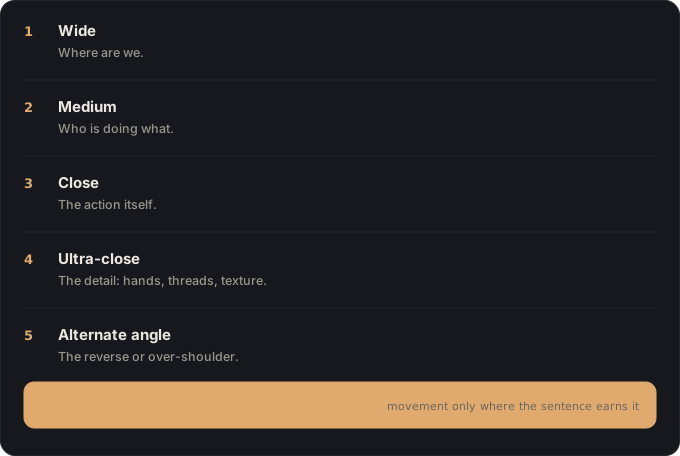
The five-shot habit
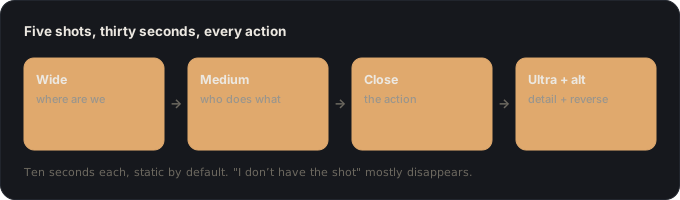
For every action your video contains (a cut, a pour, an install, an unboxing) steal the documentary standard and cover it five ways: wide (where are we), medium (who’s doing what), close (the action itself), ultra-close (the detail, hands, threads, texture), alternate angle (over-shoulder or reverse). Thirty extra seconds of shooting per action.
The reason isn’t cinematic ambition. It’s that the edit is unknowable in advance. The five-shot set gives every action a beginning-middle-end at any pacing the cut ends up needing, a cutaway for every trim, and a detail shot for exactly the sentence that needs punctuating. One habit, and “I don’t have the shot” mostly exits your vocabulary: along with the jump cuts you didn’t choose.
Hold longer, move less
The two field mistakes that make b-roll unusable arrive together in every beginner card:
Too short. You feel done at four seconds; the edit wants ten. Cross-fades eat a second on each end, and the usable middle of a shot (after the wobble settles, before the drift) is always shorter than what you shot. Ten-second minimum per shot, counted in your head. Long is trimmable; short is gone.
Too much motion. Constant pans, orbit moves, the swoosh: each one locks the edit into that move’s duration and rhythm, and three consecutive moving shots read as a real-estate tour. Static, stable, well-composed shots cut together at any rhythm the pacing calls for. Movement is punctuation, spent when the sentence earns it: the slow push on the reveal, the interrupt where the story turns, not the default state of the camera.
Shoot the story, not just the process
The five-shot habit covers actions; the wallpaper instinct covers places. What both miss is the layer your video actually runs on: the story beats happening in the room. The frown when the measurement is wrong twice. The pile of failed attempts growing off to the side. Your own hands hesitating. This is the b-roll that pays off stakes and plants setups, and it’s the hardest to get, because it happens while you’re busy living it. Two habits help: leave a locked-off wide running during risky steps (the disasters film themselves), and after anything notable happens, take ten seconds to shoot its aftermath: the evidence is still on the table.
The evening footage review closes the loop: audit the card against the shot list, and note which sentences still have no picture. That’s tomorrow’s ten-minute pickup, not day-three’s compromise.
The b-roll check
- Every clip on the card can name the sentence it answers.
- Five shots per action: wide, medium, close, ultra-close, alternate.
- Ten seconds minimum, static by default, movement only where the sentence earns it.
- Story beats covered, not just process: reactions, aftermath, the failure pile.
- The card audited against the shot list the same evening.
🎬 Video script
- Open on the same claim covered by wallpaper vs evidence: “One of these videos is still arguing. The other is on hold.”
- Demonstrate the five-shot habit on one mundane action in real time: thirty seconds, five shots.
- Show the four-second-shot graveyard: beautiful clips, all unusable, and why.
- Catch a story beat live: the locked-off wide during a risky step, and its aftermath shot.
- Close: “Shoot evidence, hold for ten, and let the wide catch what you’re too busy to see.”
Sources
- YouTube Help, Measure key moments for audience retention: the dips wallpaper b-roll can’t fix and evidence b-roll prevents.
- Tauroza & Allison, Speech rates in British English, Applied Linguistics 11 (1990): spoken pace sets shot rhythm: a ten-second hold covers roughly a spoken sentence and a half.
Key takeaways
- Every b-roll clip should answer a sentence from the script, evidence, not atmosphere.
- The five-shot habit: wide, medium, close, ultra-close, alternate angle, every action, every time.
- Hold every shot ten seconds; static and steady beats swooshing and short.