Docs Story miner
You shot it with no plan. Now find the story.
Shooting first is a legitimate way to work, and it leaves you with a real problem: four hours of material and no idea what the video is. This proposes angles the footage can actually support.
The problem it solves
When you shoot without a plan, the story has to be found afterwards, and finding it means holding four hours in your head at once. Most people cannot, so they cut chronologically and hope a shape emerges. It usually does not.
What it needs first
- Ingested footage. The miner reads per-clip digests, so clips must have been through transcription and the visual index first.
- Nothing else. This is the footage-first entry point: it exists precisely for the case where no plan was written before the shoot.
How it works
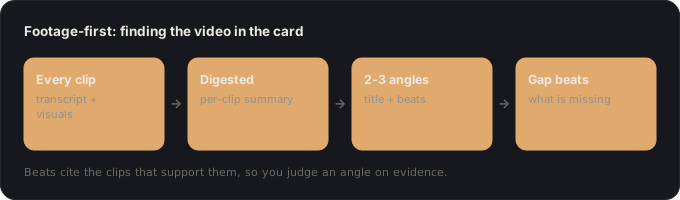
- 1 It reads the whole card firstWorking from the transcripts and visual index built at ingest, so the proposals come from what is on the card rather than from what you remember shooting.
- 2 Two or three angles, not oneEach is a different video the same footage could become, as an ordered beat sheet. Seeing them side by side is what makes the choice possible.
- 3 Gaps named up frontEach angle says what it would still need. An angle that requires a shot you never got is a real option with a known price, not a trap you discover in the edit.
What you get back
- Two to three candidate angles
- Each a different video the same footage could become, not three phrasings of one idea.
- title + logline
- Per angle, so you are choosing between concrete videos rather than abstract themes.
- A beat sheet citing clips
- Each beat names the clips that support it, so you can see the evidence behind an angle before adopting it.
- GAP beats
- Beats the story needs and the footage does not have, marked as gaps rather than quietly omitted. This is the part that tells you what to pick up.
What it will not do
- It is a proposal, not an edit. Adopting an angle feeds the spine diff; nothing is cut or assembled.
- Per-clip transcript is capped in the mining context so a long vlog does not blow the budget. Visual descriptions ride along uncapped.
- It cannot find a story that is not in the footage. Three weak angles is a real answer, and it means the pickup list matters more than the edit.
What it buys you
- The story comes out of the footage instead of being imposed on it.
- You compare whole videos rather than committing to the first shape you see.
- Once adopted, an angle becomes an ordinary spine, so every later check works on it normally.
Under the hood
The miner is the footage-first door into the same spine object the plan-first flow uses. That matters more than it sounds: an adopted angle is not a special second-class plan, so the coverage check, the verdict, and packaging all treat it identically. Two of the case studies on this site were built this way.
On a real video
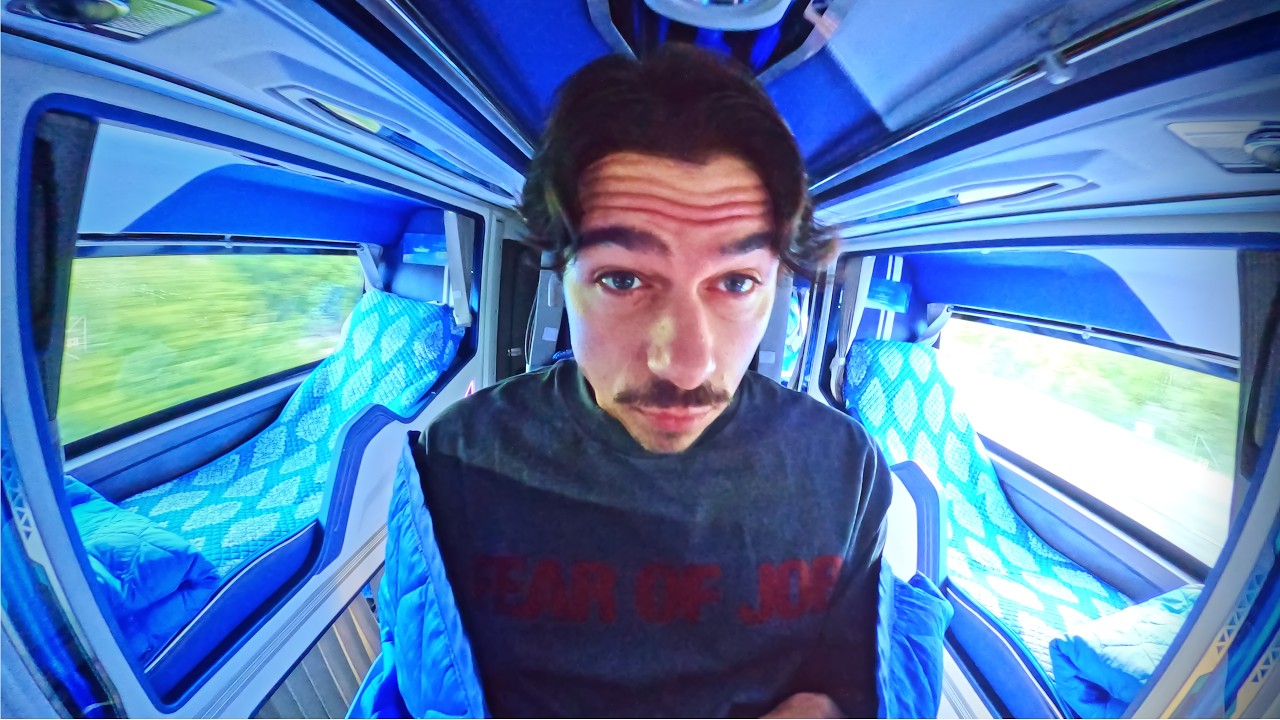 My 20-hour Vietnam Sleeper Bus Mistake Read the case study →
 Questions
How much footage does it need?
Enough to have a story in it. The case studies here range from 71 to 203 clips.
What if none of the angles is right?
They are editable spines, so the usual move is to adopt the closest and reshape it. The proposals are a starting shape, not a verdict.
Can I use it on old footage?
Yes. It works on anything you ingest, including material shot long before you had the app.
Story miner is one lens of Vanpelt Studio.