Editing for retention · Lesson 2
The first cut is a structure cut
Polish is the most seductive procrastination in editing. The three-pass workflow (structure, rhythm, polish) and why nothing gets beautiful until the story is locked.
Every editor knows the pull: assembly’s half done, and there’s this one section that could be great, so you spend the evening on its music, its speed ramps, its color. It’s real work, it feels like progress, and it’s the most seductive procrastination in the craft, because polishing is easier than deciding, and the decision you’re avoiding is structural: does this section belong in the video at all?
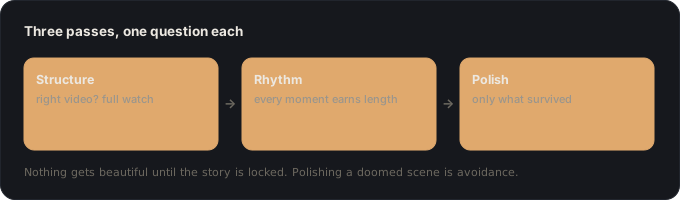
The professional answer is passes, honored in order. Structure, rhythm, polish. Each pass has one question, and mixing them is where solo edits lose their days.
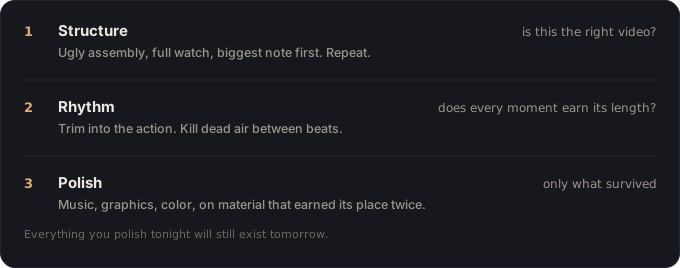
Pass 1: structure: is this the right video?
Assemble the paper edit rough: right clips, right order, cuts landing roughly where they should. No music, no graphics, no color, ugly. Then (the step most creators skip) watch it end to end, once, without touching anything. Notes only.
You’re watching for exactly what the retention graph will later measure: does the promise land in the open? Does each beat advance the question? Where does your own attention dip, because your bored is the audience’s gone. Then make the biggest structural change the notes demand: kill the beat, reorder the middle, move the payoff earlier. Repeat until an end-to-end watch produces no structural notes. Only then does the video deserve rhythm.
The discipline this buys: sections die before they’ve been polished, when they’re still cheap to kill. The section you spent last night scoring is no longer competing on whether it serves the story. It’s competing on sunk cost, and darlings win those fights.
Pass 2: rhythm: does every moment earn its length?
Now tighten inside the locked structure: trim the entrances and exits of every clip (the first cut is almost always late in and out early, trim into the action), kill the dead air between beats, let the pacing vary the way the story needs, fast through process, patient into the reveal. This is where the cutaways you shot pay off: internal trims without jump cuts. Rhythm work on a locked structure compounds; the same work on a shifting structure gets redone every time a section moves, which is precisely why it waits.
Pass 3: polish: only what survived
Music, sound design, graphics, color, the pattern-interrupt garnish: applied to a video whose every section has already earned its place twice. Polish now multiplies instead of gambles: nothing you beautify tonight dies tomorrow. And polish has a natural stopping point the next lessons cover, because past a threshold, another hour of it changes nothing the viewer’s decision runs on.
The passes protect you from yourself
Name the failure modes the order prevents. Polishing early = betting hours on scenes that may not survive structure. Rhythm early = perfecting the pace of the wrong video. And the subtle one: skipping the end-to-end watch because “I basically know what’s there”. You know what you intended; the watch is how you meet what’s actually on the timeline, and the difference between those two is where every mysterious sag lives. One full watch per structural change. It’s the cheapest quality control in the entire pipeline.
The three-pass check
- Pass 1 ran to a full, untouched, end-to-end watch: notes only.
- The biggest structural note got fixed first; watches repeated until none remain.
- No music, graphics, or color touched the timeline before structure locked.
- Rhythm pass trimmed into the action and varied the pace on purpose.
- Everything polished tonight will still exist tomorrow.
🎬 Video script
- Open on the scored, graded, gorgeous section: then delete it on camera: “Four hours. It never belonged in the video. Here’s the workflow that would have told me at hour zero.”
- Lay out the three passes with one question each.
- Run pass 1 honestly: the ugly watch, the notes, the biggest-problem-first fix.
- Show rhythm work landing on locked structure, and the same trim being redone twice on an unlocked one.
- Close: “Structure decides what exists. Rhythm decides how it moves. Polish decides how it shines. In that order, forever.”
Sources
- YouTube Help, Measure key moments for audience retention: the graph is a structure report first; the passes mirror it.
- George Loewenstein, The Psychology of Curiosity, Psychological Bulletin 116 (1994): your own dipping attention in the rough watch is the gap-machinery reporting.
Key takeaways
- Edit in passes (structure, then rhythm, then polish) and never let a later pass start early.
- Watch the rough cut end to end, badly rendered, and fix the biggest structural problem first.
- Polishing a doomed section is the most expensive way to avoid deciding whether it belongs.