Scripting · Lesson 2
Script the skeleton, improvise the delivery
Full scripts kill energy; pure improv kills structure. The three-tier system (verbatim where stakes are highest, beats where they aren't) gets both.
“Should I script my videos word for word?” is one of those questions where both confident answers are wrong. Full-verbatim creators get precision and lose the person: delivery flattens into recitation the ear detects instantly. Pure improvisers keep the energy and lose the architecture: takes ramble, points repeat, and the beats that hold retention arrive half-formed or not at all. The craft answer is that scripting isn’t one decision. It’s a budget, spent where the stakes are. (If you want the end-to-end version first, how to write a video script walks the whole process from promise to shoot day.)
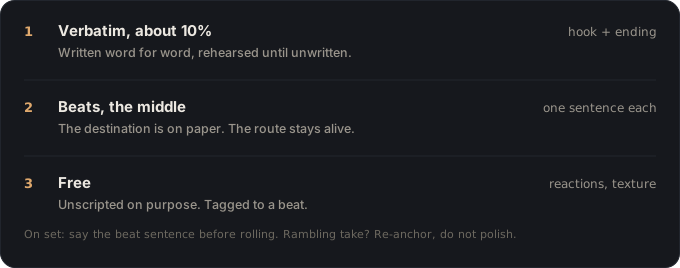
The three tiers
Tier 1: verbatim: the hook and the ending. The first 30 seconds are the most expensive real estate you own (the platform literally grades them as a named metric) and the promise they must pay off is too precise to approximate live. Write the hook word for word, rehearse it until it sounds unwritten. Same for the ending: the payoff line, the handoff pitch, the next question, three sentences that decide what a finished viewer does next are worth three written sentences. Tier 1 is maybe 10% of the video and carries half its consequences.
Tier 2: beats: the middle. For each beat, script the destination, not the route: the point this beat must land (one sentence, written), the evidence or moment that lands it, and the exit line into the next beat if the transition is load-bearing. Then talk. You know where you’re going and what must be true when you arrive; how you get there stays alive. This is where improv is an asset: the phrasing you find live is ear-native by construction, and the small discoveries (“wait, that’s actually why it failed”) are the moments viewers rewatch.
Tier 3: free: reactions and texture. The on-location reactions, the mid-build commentary, the aside when something surprises you. Don’t script it, don’t outline it, just know which beat it belongs to, so the story check can find it later.
Why the structure makes the improv good
The counterintuitive part: tiering doesn’t limit spontaneity, it funds it. Unstructured improv rambles because the speaker is doing two jobs at once (inventing the route while remembering the destination) and when working memory loses the destination, you get the loops and restarts that die in dips. Give the destination to paper and the whole performance budget goes to delivery. It’s the same reason pacing lives on the beat sheet: structure on paper, life on camera.
Two practical rules keep the tiers honest on shoot day. Speak the beat sentence before rolling: saying the destination out loud pins it; you can improvise a five-minute beat off one spoken sentence and stay on target. When a take rambles, don’t polish it: re-anchor: reread the beat sentence, roll again. The second take after re-anchoring is almost always tighter than the fifth take without it.
And when the tiers fail on the day (the words won’t come, energy’s gone) drop a tier: turn the beat sentence into a verbatim line and read it honestly, or park the beat for a pickup. A stiff beat is recoverable; a missing one isn’t.
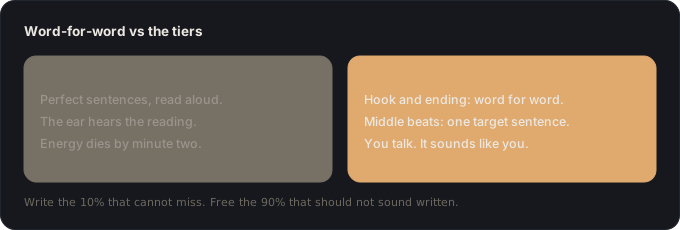
The tier check
- Hook and ending exist word for word, and were rehearsed to sound unwritten.
- Every middle beat has a written destination sentence and named evidence.
- Nothing else is scripted; tier 3 stays free.
- On set: beat sentence spoken before each take; rambles get re-anchored, not polished.
- The script document is one page, not eleven.
🎬 Video script
- Open on the two failure modes back to back: the newscaster recitation and the fifteen-minute ramble. “Both of these creators prepared. Both prepared wrong.”
- Draw the three tiers over a real beat sheet, coloring what’s verbatim, what’s beats, what’s free.
- Show tier 1 earning its keep: a winged hook vs a written one, with the intro-retention framing.
- Demonstrate the re-anchor rule live: ramble a take, reread the beat sentence, nail the retake.
- Close: “Write the 10% that can’t miss. Free the 90% that shouldn’t sound written.”
Sources
- YouTube Help, Measure key moments for audience retention: the intro metric: why the first 30 seconds justify verbatim treatment.
- Tauroza & Allison, Speech rates in British English, Applied Linguistics 11 (1990): improvised speech is register-natural; scripted monologue reads measurably differently.
Key takeaways
- Scripting isn't binary. Tier it: verbatim hook and ending, beat-level middle, free connective tissue.
- The hook is always written out; the first 30 seconds are too expensive to wing.
- Improv earns its freedom inside structure, a beat with a known destination can't ramble far.